
The question usually arrives on a form. A client's pre-qualification questionnaire, an insurer's renewal annexure, or an auditor's checklist asks whether your organisation operates a drug and alcohol testing programme, and asks you to attach the policy. Somebody in HR or EHS then has forty-eight hours to answer a question nobody was asked five years ago.
The honest answer for most Indian employers is partial. They may already have a breath alcohol tester at the gate. They almost certainly do not have a drug panel programme. And they discover that the phrase "drug and alcohol tester" is being used to describe two very different activities with different costs, different turnaround times and different legal weight.
Splitting those two apart is the first useful decision. Once you have done it, the rest of the programme becomes ordinary operational work.
A drug and alcohol tester is not one device
Alcohol screening and drug screening sit at opposite ends of a spectrum.
Alcohol is measured as current impairment. Breath carries alcohol out of the blood in a fixed relationship, so a handheld breath analyser gives you a number in seconds that reflects what is in the person's system right now. That is exactly the question a supervisor needs answered before a shift starts.
Drugs are detected as past exposure. A urine or saliva panel tells you that a substance or its metabolite is present, and depending on the substance that window can stretch back days or weeks. It is not a statement about fitness to work in the next hour, and it cannot be read as one without a confirmatory laboratory test.
So the working split for most sites is:
Alcohol Drugs
Sample Breath Urine, saliva, sometimes hair
Where At the gate, by your own staff Collection room or clinic, trained collector
Result Immediate number Screen in minutes, confirmation in days
Tells you Present impairment Prior use
Runs as In-house, daily or random Outsourced panel, periodic or for-cause
If you can only build one leg of the programme this year, build the alcohol leg. It is the one that catches the risk before it reaches a machine or a highway.
What breath screening handles on your own site
A handheld breath analyser answers the practical questions a shift in-charge actually faces. Is this driver fit to take the vehicle out. Is this rigger fit to go up. Is the reading high enough that I hold the person, or low enough that I record it and move on.
The number matters, and it is worth training supervisors to read it properly rather than to react to it. Our guide on what BAC tester readings mean and what you can act on covers the units, the difference between a screening reading and an evidential one, and why a retest after fifteen minutes exists.
For road-facing operations, the reference point in India is the Motor Vehicles Act, 1988, which sets the driving limit at 30 mg of alcohol per 100 ml of blood. Anything above that in a person about to drive your vehicle is not a discipline problem, it is an exposure problem for the organisation as well. The employer's side of that exposure is set out in driving under the influence of alcohol: the law, the test and the employer's exposure.
Many workplaces set an internal threshold of zero for safety-critical roles, which is a contractual standard rather than a statutory one. That is legitimate, as long as it is written down before it is enforced. On where those internal thresholds come from, see alcohol: how much is safe, and what Indian workplace rules actually say.
What has to go to a laboratory
Drug screening needs external capability, and there is no shortcut.
A rapid urine or oral fluid panel gives a presumptive result. A presumptive positive must go to a laboratory for confirmation by a method such as GC-MS or LC-MS before anyone acts on it. Prescription medication, over-the-counter drugs and even some foods can produce a non-negative screen, and the confirmation step exists to protect the employee and the employer equally.
Alcohol can also be measured in blood or urine, and occasionally is, particularly after an incident or when a screening result is contested. What the lab measures and what breath screening has already told you are not the same thing, and it is worth knowing the difference before you send anyone for a blood draw. That comparison is set out in alcohol and blood test: what the lab measures and what breath screening already answers.
For drug panels, the practical route in India is a contract with an accredited diagnostic laboratory, with trained collectors, sealed sample kits and a documented chain of custody. Do not attempt to run a drug panel with untrained staff in a security cabin. The result will not survive its first challenge.
The policy is the part that gets tested, not the device
India has no single central statute mandating workplace drug and alcohol testing for all employers. Obligations come from a combination of sources: the general duty of care under the Factories Act, 1948, sector rules such as those applying to mines and to public transport, contract conditions imposed by clients, and the certified standing orders or employment contracts that govern discipline.
That means your authority to test comes largely from your own documents. Which is why the documents have to be right.
A workable policy states, in plain language:
- Who is covered. Employees, contractors, visiting drivers, and whether the coverage differs by role.
- When testing happens. Pre-employment, pre-shift, random, for-cause after observed behaviour, and post-incident.
- The threshold. A specific number for alcohol, and the statement that a drug screen positive means confirmation, not immediate action.
- Consent and dignity. Testing is included in the terms of employment, conducted privately, and refusal is treated as a defined disciplinary matter rather than as an automatic positive.
- The retest right. A second breath sample on request, after a stated interval.
- What happens next. Removal from the safety-critical task, transport home, referral to counselling or rehabilitation where appropriate, and the disciplinary pathway.
- Who keeps the records, for how long, and who may see them.
A site that tests without this paperwork is generating disputes. A site with the paperwork and no testing is generating an audit finding. You need both.
Choosing the alcohol screening hardware
When you do buy, the specification questions are short.
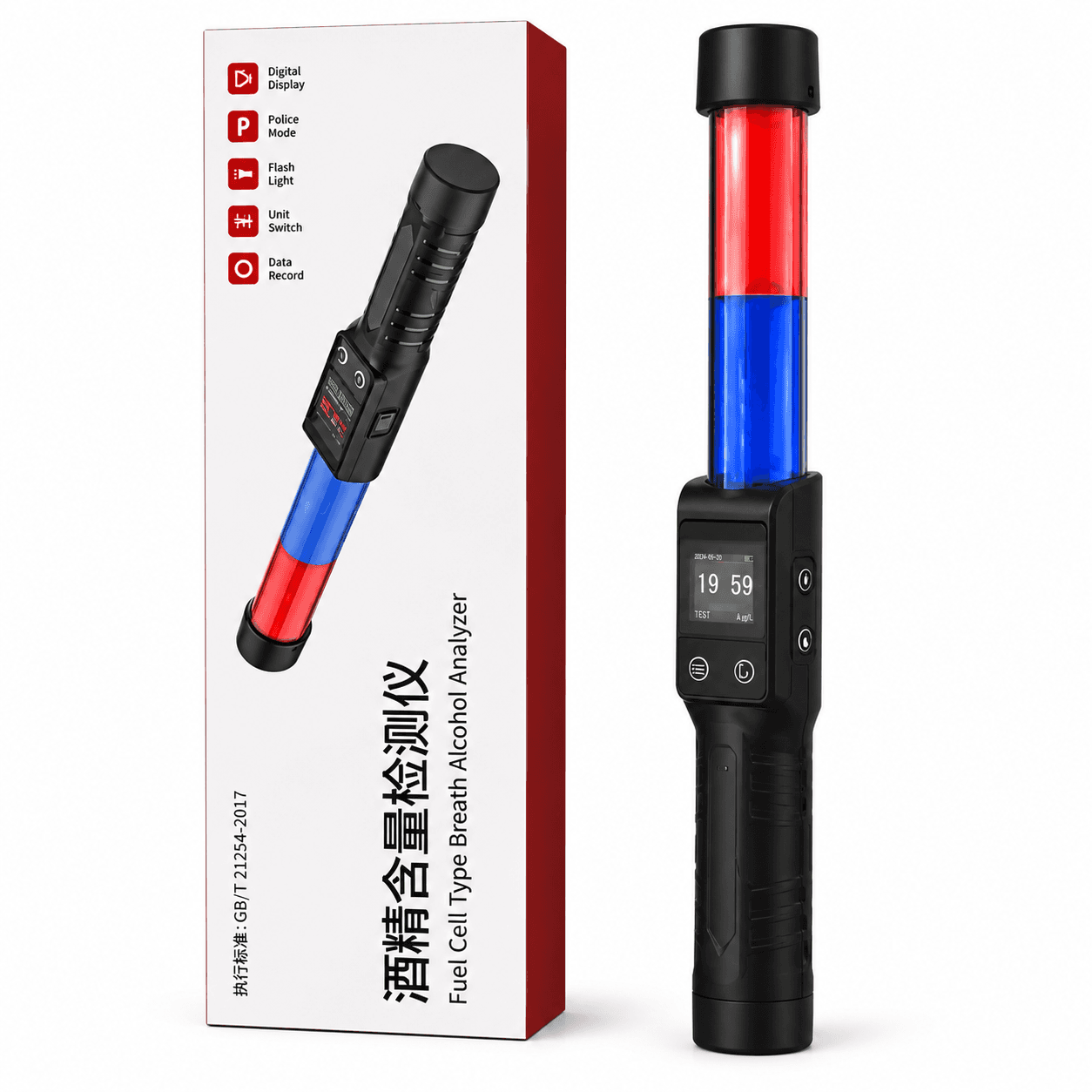
Sensor type. Fuel cell sensors respond to ethanol specifically and hold their accuracy through repeated use, which suits a gate testing dozens of people. Semiconductor sensors cost less and drift more, and are better suited to occasional or personal use. The mechanics are explained in how an alcohol testing machine works, with types and a buying guide.
Throughput and mode. Passive or hover-style checking is quick for a queue of a hundred; a mouthpiece test gives the defensible number you record against a name. Most high-volume sites use passive to filter and mouthpiece to confirm.
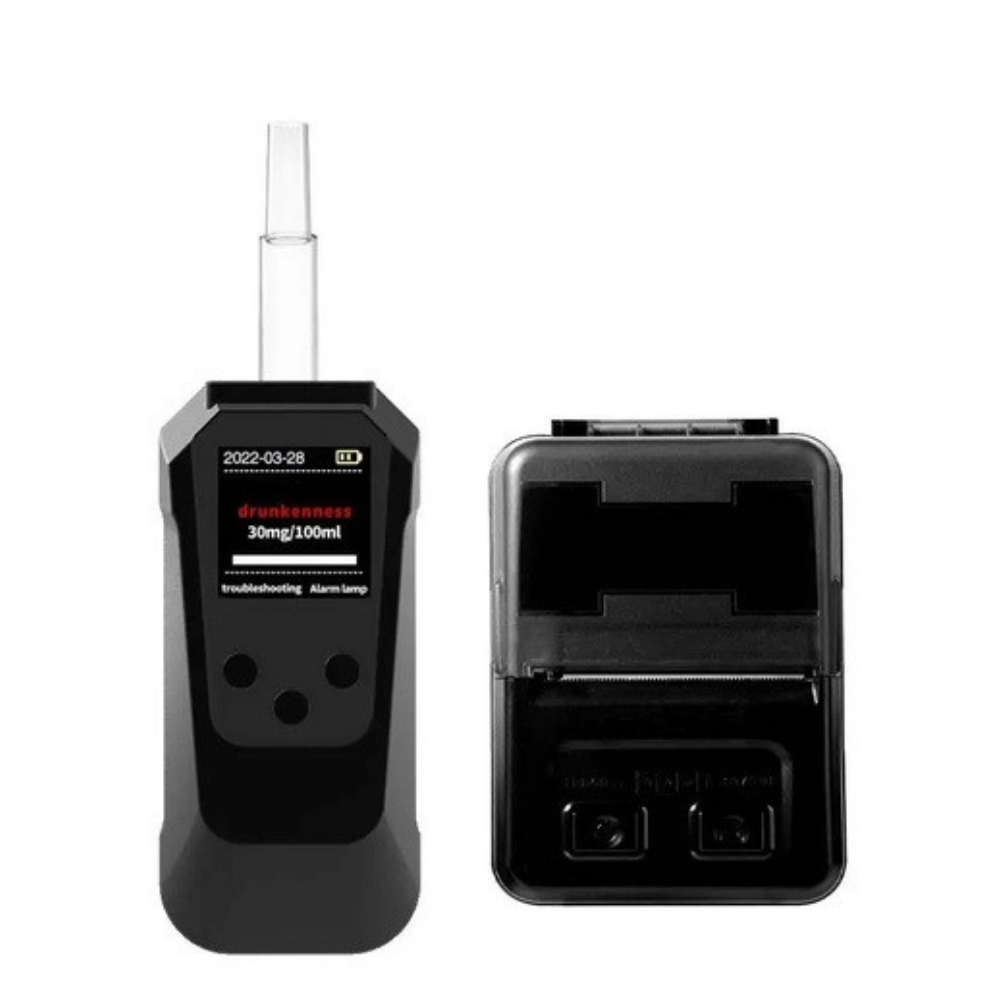
Printing and logging. If your programme exists to satisfy an auditor or a client, the device needs to produce a record with time, date and result. A verbal "he was fine" is not evidence.
Calibration. Every alcohol sensor drifts. A device nobody has calibrated in a year is worse than no device, because it gives false comfort and it collapses under challenge. Fix the calibration interval in the policy and hold the certificates. Feature-by-feature comparisons are covered in understanding the alcohol testing machine: features and uses.
For smaller operations, including families who want a check before someone takes the car out, a simpler unit is enough; see choosing a home breath alcohol analyzer. Buyers comparing local suppliers and service options may also find the alcohol tester buyer's guide for Mumbai useful on accuracy and compliance questions.
Who carries the consequence
When a loaded truck leaves a yard with an impaired driver, the consequence lands in a predictable order: the driver, the people on the road, the transport manager who released the vehicle, and then the organisation whose name is on the door. Insurers, clients and investigators all ask the same question afterwards, which is what system was in place to prevent it.
A drug and alcohol tester at the gate does not answer that question by itself. A written policy, a calibrated device, trained supervisors, a laboratory contract for drug panels and a retained record of every test does.
Starting small without starting badly
If you are answering that client questionnaire this week, a defensible starting programme looks like this:
- Write the policy and get it approved and communicated before any testing begins.
- Buy fuel cell breath analysers for the gates and vehicles that matter most, with printing where records are required.
- Train the two or three people who will actually operate them, including how to handle a refusal and a contested reading.
- Sign a laboratory contract for drug panels, used for pre-employment, for-cause and post-incident cases rather than daily screening.
- Set the calibration calendar and keep the certificates with the audit file.
- Review the log monthly. Patterns by shift, route or contractor tell you more than any single reading.
That is a programme. Everything else is a device sitting in a drawer.
 9,500
9,500