
A warehouse supervisor in Bhiwandi watched a forklift clip a racking upright at three in the afternoon. Nobody was hurt. The operator was unsteady, argumentative, and denied everything. The supervisor did what most people do at that point: he typed drug alcohol testing near me into his phone.
The results were pathology collection centres. The two nearest ones closed at six, needed an appointment, and could not tell him whether a sample taken at seven that evening would prove anything about three o'clock. By the time a report arrived, the operator had gone home, come back the next morning, and the incident had become a dispute about whose word counted.
That is the real problem behind this search. A lab is the right answer to one question and the wrong answer to another.
The short answer
If you need a defensible, evidential result for a legal case, a compensation claim, or a termination that will be challenged, you need an accredited pathology laboratory. If you need to know whether a person is fit to start a shift, drive a vehicle, or work at height in the next two minutes, you need screening equipment on site, operated by your own trained staff.
Most Indian employers searching for drug and alcohol testing near me actually need both, in that order: routine in-house screening, with a lab used only for confirmation and escalation. Relying on a lab alone means you find out after the damage.
What "near me" returns in India, and why it disappoints
Search results for this term skew heavily towards diagnostic labs in metros, marine and seafarer medical facilities, and pre-employment medical providers. Those are legitimate services. They are simply built around a different workflow.
A collection centre expects one person, by appointment, during business hours, with a report in a day or more. A factory gate expects two hundred people in forty minutes, at shift change, including the six-thirty morning shift on a Sunday. No amount of proximity fixes that mismatch.
There is also the coverage problem. Sites that need screening most often sit where labs are not: a highway transport hub, a quarry, a solar project in a district town, a hotel banquet operation running past midnight. Distance from the nearest collection centre is not a reason to skip screening. It is a reason to own the screening.
Screening versus confirmation: two different jobs
On-site screening Laboratory testing
Question answered Is this person fit to work right now? What substances were in this person's system?
Time to result Seconds (breath alcohol) to minutes (rapid drug panel) Hours to days
Who operates it Your trained security, HR or safety staff Accredited collectors and technicians
Cost per test Low, once equipment is owned Per-sample fee, plus travel and time
Best used for Every shift, every driver, every contractor entry Confirming a positive screen, incidents, disciplinary cases
Weakness Screening result, not evidential proof on its own Too slow to prevent anything
Read the table again from the point of view of the person who signs the incident report. Screening prevents. Lab testing documents. You cannot substitute one for the other.
Alcohol: the part you should almost always bring in-house
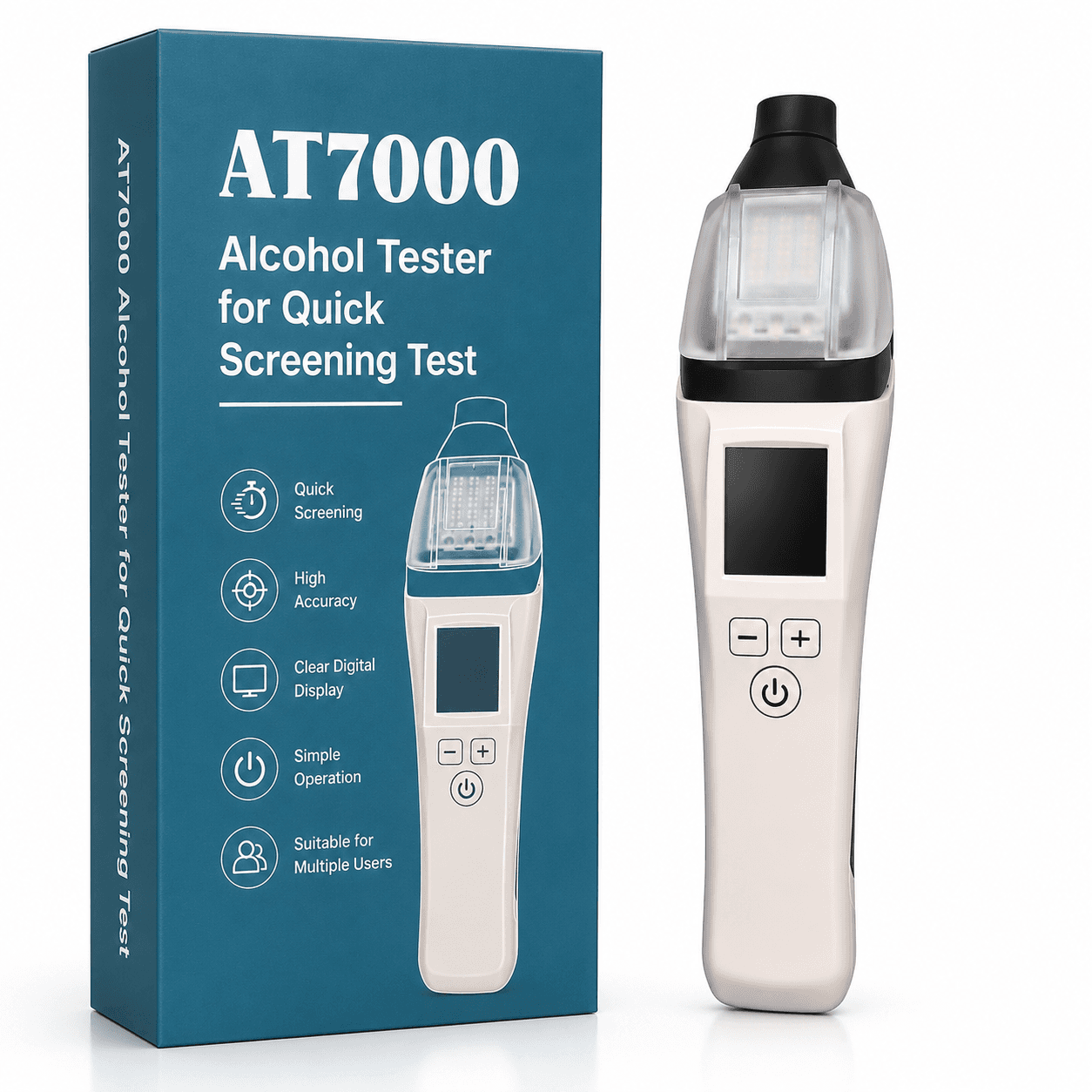
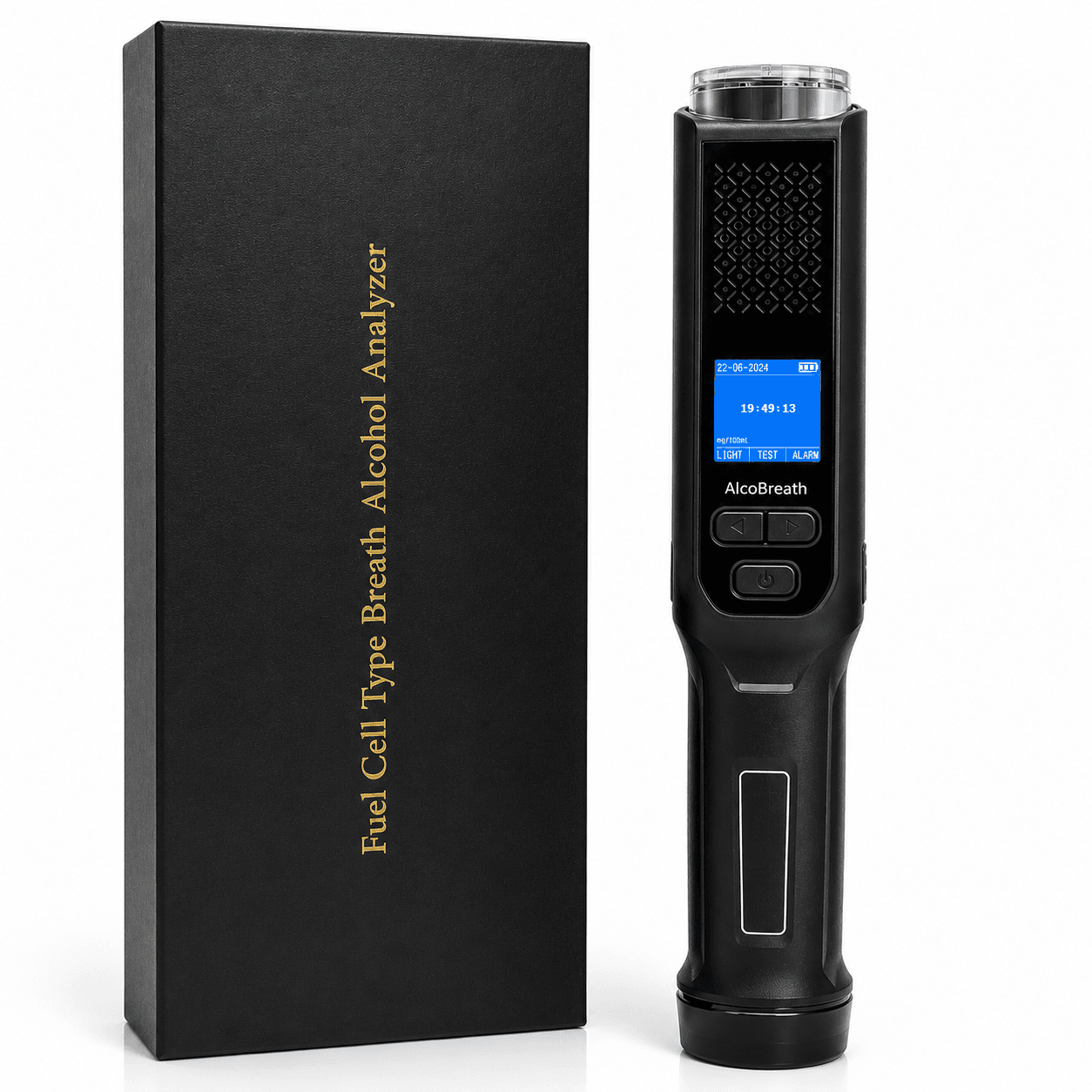
Breath alcohol is the easiest half of this problem to solve. A fuel-cell breath analyser gives a numeric reading in seconds, needs no consumable beyond a mouthpiece, and can be operated by a gate guard after a short training session.
Indian road law gives you a familiar reference point. Section 185 of the Motor Vehicles Act treats 30 mg of alcohol per 100 ml of blood as the threshold for drunken driving. Many transport operators and industrial sites go further and set a zero-tolerance internal limit, because a driver at 25 mg is not a driver you want on a national highway with 20 tonnes behind him.
What matters in the equipment is the sensor. Semiconductor units drift and react to substances that are not ethanol. Fuel-cell sensors are specific to alcohol and hold accuracy across repeated tests, which is what a shift-change queue demands. If you are comparing options, this guide to choosing an alcohol testing machine for a large shift change covers throughput, mouthpiece handling and battery life in detail.
For the buying decision itself, Alcohol Tester Near Me: How to Buy the Right One, Not the Nearest One is the more useful read than any map listing, because proximity of the seller has almost nothing to do with fitness of the device.
Drugs: where an outside provider still earns its fee
Drug testing is less forgiving. Rapid urine panels for common substance groups exist and are used at Indian sites, particularly in mining, ports, oil and gas and on client-mandated contracts. They are useful, but they carry obligations that breath alcohol does not.
You need privacy for collection, a documented chain of custody, a policy that says what a non-negative result triggers, and a confirmatory laboratory arrangement in place before the first sample is ever collected. A rapid panel result that a worker disputes is worth very little if there is no split sample and no confirmation pathway.
This is where the lab you found in your search belongs. Not as your screening programme, but as the named confirmation partner in your written policy, agreed in advance, with turnaround times and costs settled. If your operation is small, an occupational health provider can also handle pre-employment panels while you keep daily alcohol screening in-house.
Write the policy before you buy anything
Equipment without policy creates arguments. A workable policy for an Indian workplace needs to state, in plain language:
- Who is tested: all employees, contractors and visiting drivers, or defined safety-critical roles
- When: pre-shift, random, post-incident, return-to-duty, reasonable suspicion
- What limit applies: the numeric alcohol threshold, and whether it is zero
- Who tests: named trained operators, with a second operator for verification
- What happens on a positive screen: immediate stand-down, confirmation test, escalation route
- What is recorded: reading, time, operator, device serial, and the person's acknowledgement
- How disputes are handled: retest interval, split sample, access to the confirmation lab
Introduce it with notice and consent language in the employment or contractor terms. Screening applied without a written basis is the version that collapses at the labour court, not the version that stands.
Records, calibration and the disputed reading
The most common weakness in Indian screening programmes is not the device. It is a device that nobody has calibrated in a year and a logbook that stops three months after the programme launched.
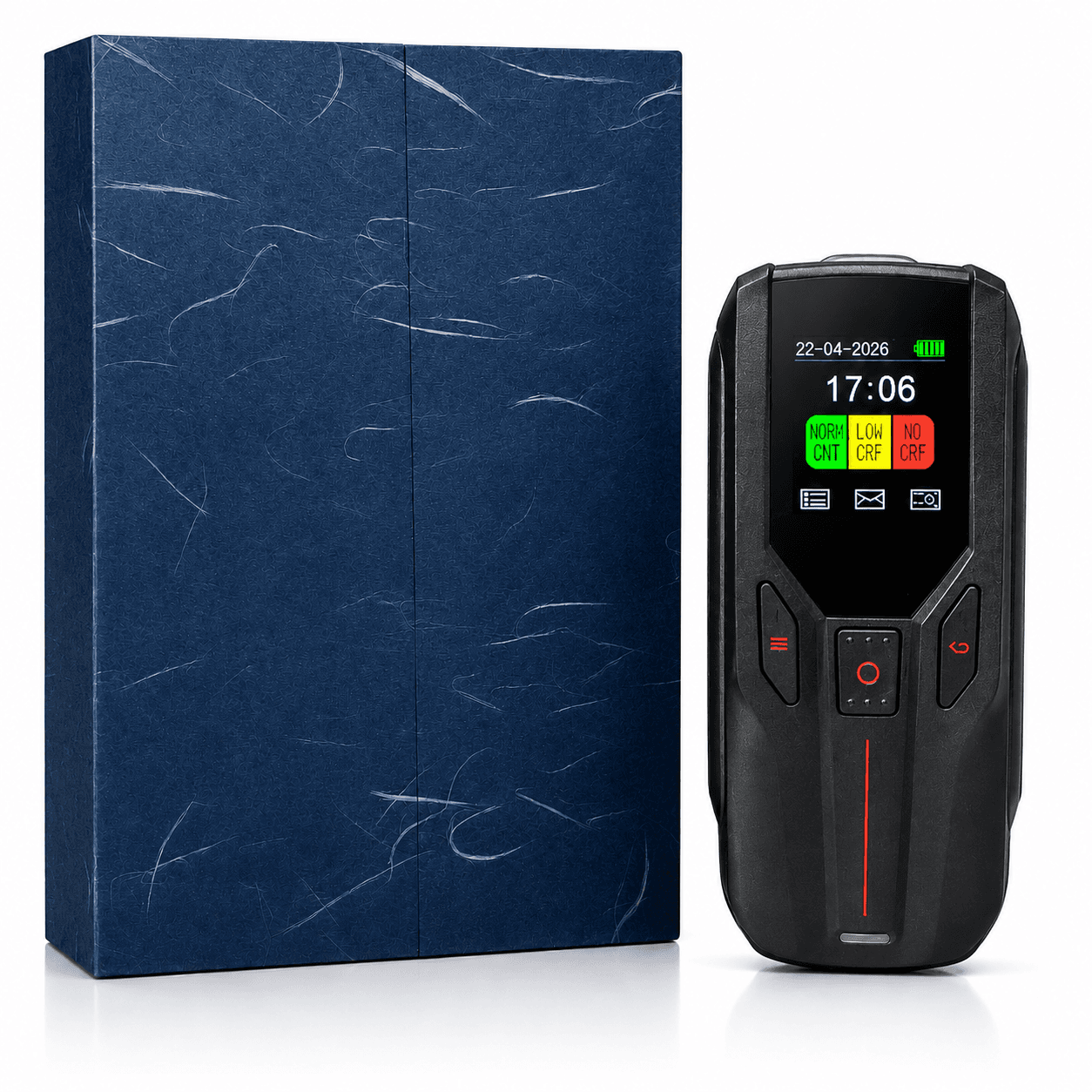
Calibration is what converts a reading into something you can defend. Follow the manufacturer's interval, keep the certificates, and log every test with the device serial number so a specific reading can be traced back to a specific calibrated instrument. Data-logging units with printer support make this straightforward at high-volume gates, and Alcohol Testing Near Me: What the Search Finds and What Your Site Actually Needs explains why record-keeping decides whether a programme survives its first serious challenge.
When a reading is contested seriously, the escalation is a blood test at a hospital or accredited lab. Blood Alcohol Level Test: What It Proves and When You Need One sets out what that result establishes and its limits, and Buy a Blood Alcohol Tester: The Real Cost of Owning One covers the total cost of running your own capability versus paying per sample.
What this looks like by sector
Fleet and logistics. Screening at dispatch, before keys are handed over. A dispatcher who can hold a vehicle on a reading is worth more than a report that arrives after the trip.
Construction and projects. Gate screening for own staff and subcontractors, because the principal employer carries the consequence regardless of whose payroll the worker sits on.
Factories, mines and warehouses. Pre-shift screening for machinery operators and work-at-height roles, plus mandatory post-incident testing written into the incident procedure.
Hotels, venues and events. Screening for staff on duty, and often for drivers engaged by the venue. A banquet finishing at one in the morning has no lab option at all.
Schools and campuses. Screening for bus drivers and attendants, every trip, with results a transport in-charge can show a parent.
The next step
Stop searching for the nearest collection centre and split the requirement. Name a confirmation lab in your policy and negotiate turnaround. Then buy a fuel-cell breath analyser sized to your headcount, with a calibration plan and two trained operators per shift.
AlcoBreath supplies fuel-cell workplace screeners with calibration support across India, so a site in a district town runs the same programme as a plant in Pune. Tell us your headcount, shift pattern and whether readings need to be printed or logged, and the specification follows from that. If you also need drug panels, we will tell you plainly which part of the job belongs to a lab.
 20,000