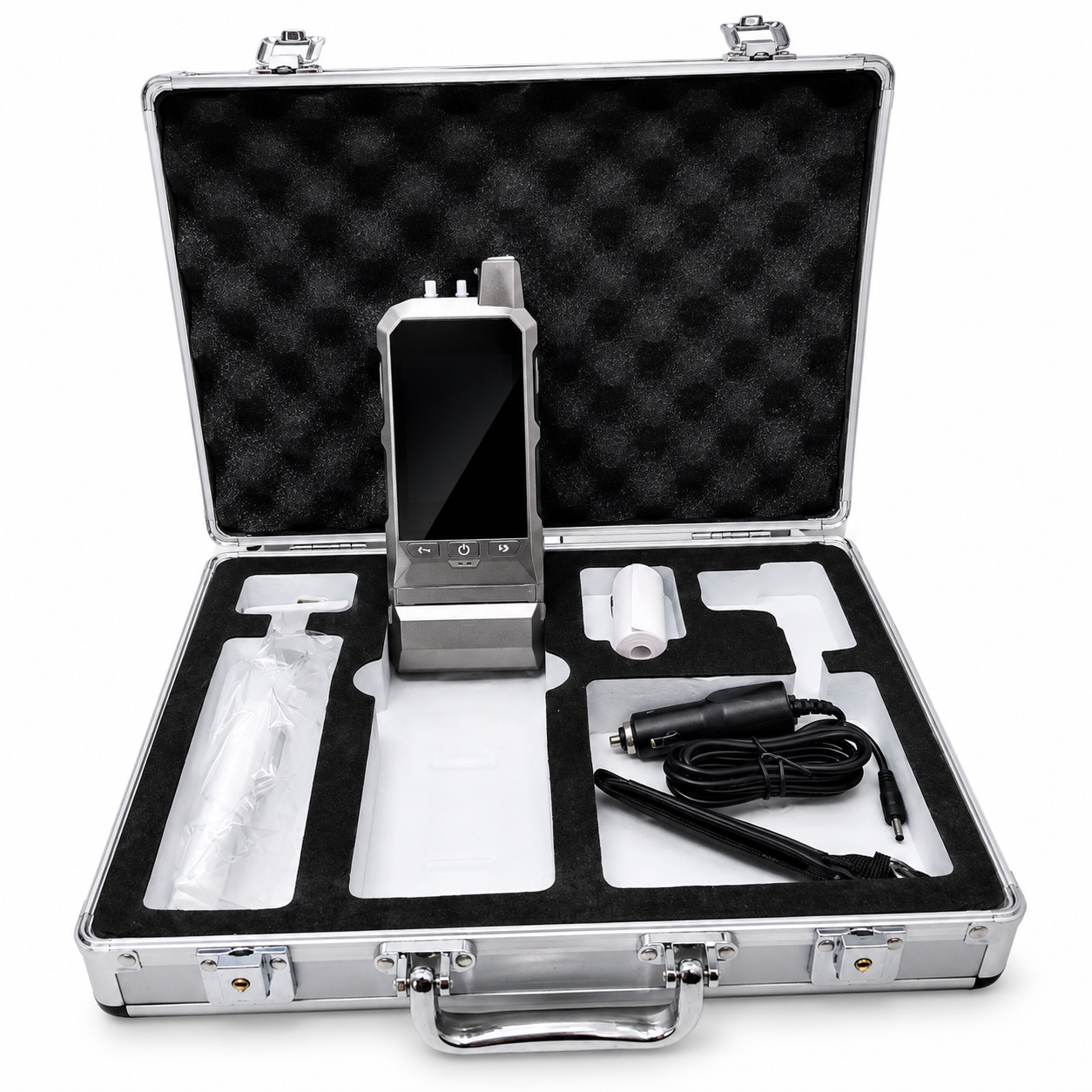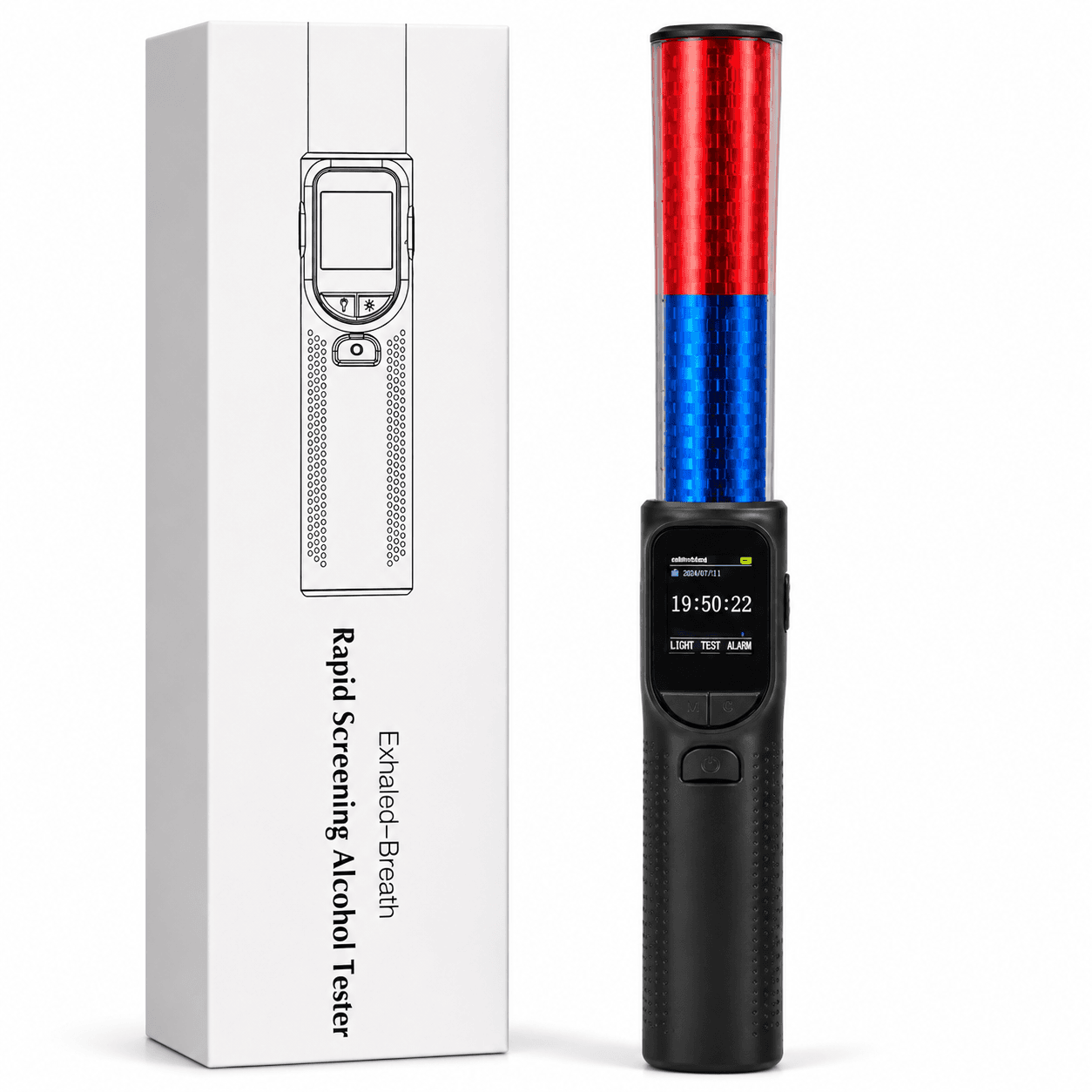

A contractor in Pune opens a client's HSE pre-qualification questionnaire on a Tuesday evening. Question 41: Does the vendor conduct random alcohol screening of personnel deployed at client sites? Attach policy and equipment details. The tender closes Friday. By 9pm someone in the office has typed "alcohol tester near me" into a phone, and the results are a mix of quick-commerce listings, directory pages for three cities and a marketplace showing prices from ₹400 to ₹32,000 for things that all look roughly the same.
That spread is the whole problem. "Near me" answers the question of who can deliver fastest. It does not answer whether the device will still read accurately in November, whether anyone will recalibrate it, or whether the printout it produces will survive a challenge from a worker or a union.
This article is about closing that gap: what to actually check before you pay, and when local really matters.
Who carries the consequence
If a driver, operator or rigger works impaired and something goes wrong, the questions land on the person who was accountable for fitness-for-duty checks. That is the transport manager, the site in-charge, the HR head who signed the policy, or the occupier under the Factories Act, 1948. It is rarely the person who bought the device.
But the buyer decides whether that accountable person has anything defensible to stand on. A ₹500 alcohol checker machine that gives a reading nobody can reproduce is worse than no device, because it creates a record that contradicts itself.
What the "near me" search actually returns
Three very different kinds of seller show up, and they are not interchangeable.
Source What you get Where it falls short
Quick-commerce and marketplaces Same-day or next-day delivery, low prices, easy returns Usually semiconductor sensors, no calibration service, no usage documentation, seller may not exist next year
Local safety-equipment dealers (directory listings) A person you can visit, cash or COD, immediate stock Stock is whatever they imported in bulk; calibration often means "send it back to us and wait"
Specialist alcohol breath analyser suppliers Fuel-cell options, calibration schedules, mouthpiece supply, support on policy and record-keeping Delivery may take a few days rather than a few hours
If you need one alcohol detector for a family car this weekend, the first row is fine. If you are screening a shift, a fleet or a guest list, the third row is the only one that holds up over a year of use.
We've written separately about what the wider "alcohol testing near me" search finds and what a site actually needs, including the difference between buying a device and buying a testing service.
The sensor decides almost everything
Before price, before brand, ask what the alcohol detector sensor is. There are two practical answers in the Indian market.
Semiconductor (MOS) sensors
Cheap, fast to warm up, and reactive. They respond to ethanol but also to other volatile compounds, so mouth freshener, some medicines, paint fumes, ketones in a diabetic's breath and even a strong solvent smell in the air can push the number up. They drift with age and temperature.
Fine for personal awareness. Not fine as the basis for sending someone home without pay.
Fuel cell (electrochemical) sensors
These oxidise ethanol specifically and produce a current proportional to concentration. They are far less prone to false positives, hold calibration longer, and are what enforcement-grade and industrial-grade units use. They cost more, and they are worth it the first time a reading is disputed.
Any alcohol testing machine used for employment decisions should be fuel cell. That single rule eliminates most of what the "near me" search surfaces.
Calibration is the question local buyers should actually be asking
Here is where proximity genuinely matters, and it is not the part most buyers think about. Every alcohol breath analyser drifts. Sensors age, and the reading slowly shifts away from truth. Manufacturers typically specify recalibration at a fixed interval or after a set number of tests, whichever comes first.
So the useful version of "near me" is not who can deliver tonight but who will recalibrate this in month twelve, and how long will I be without a device while they do it?
Ask the seller directly:
- What is the recommended calibration interval for this model?
- Do you calibrate in-house or send it to the manufacturer?
- What is the typical turnaround, and do you offer a loaner unit?
- Will you issue a calibration certificate with a date and a traceable reference?
A device with no calibration certificate is a device with no evidentiary value. An auditor or a labour court will ask for that piece of paper long before they ask for the brochure. A unit nobody has calibrated in a year is not a safety control; it is a prop.
Match the device to the situation, not to the price bracket
High-volume workplace screening. Factories, mines, ports, warehouses at shift change. You need a fuel-cell unit with fast recovery between tests, a large mouthpiece supply and ideally an integrated or Bluetooth printer for records. Our guide to choosing an alcohol testing machine that keeps a 400-person shift change moving covers throughput maths in detail.
Fleet and logistics. Pre-trip checks at the depot, plus a passive or handheld unit in the supervisor's vehicle for roadside spot checks. Under Section 185 of the Motor Vehicles Act, 1988, the threshold for driving under the influence is 30 mg of alcohol per 100 ml of blood. An operator whose drivers exceed that carries exposure well beyond the driver's own penalty, as we set out in driving under the influence of alcohol and the employer's exposure.
Construction and contractor gates. Rugged housing, dust tolerance, and a non-contact or funnel-type alcohol detector machine for fast crowd screening, with a fuel-cell unit held in reserve for confirmatory tests on anyone who screens positive.
Hospitality and events. Discreet handheld units for staff checks and, at some venues, for guests before valet handover. Speed and hygiene matter more than printouts.
Schools, campuses and hostels. Usually a single reliable handheld, used under a written protocol with a witness present, never as a surprise on a corridor.
Families. A personal alcohol breathing analyzer in the glovebox, used honestly before deciding whether to drive. If you want the health framing alongside the legal one, see alcohol: how much is safe.
Breath versus blood, briefly
People often search for an alcohol and blood test in the same breath as a breath device. They are not alternatives at the same moment. A breath analyser is a screening tool: instant, non-invasive, repeatable at the gate. Blood testing is a confirmatory clinical procedure, done at a hospital or accredited lab, and it is what gets used when a matter becomes disciplinary or legal.
The workable policy is breath first, blood only on escalation. Blood alcohol tester vs breath analyser explains where each one belongs in a disciplinary chain.
What to confirm before you pay
- Fuel cell or semiconductor, stated in writing
- Calibration interval, service location and certificate format
- Mouthpiece cost and availability in bulk (this becomes your recurring spend)
- Warranty terms and who honours them
- Whether readings are displayed in mg/100ml, the unit Indian law uses
- Whether the supplier can support you on policy wording and record formats
On that last point: buying the hardware is the easy half. Knowing what a reading means, how to handle a retest, and what to do when someone disputes the number is the half that goes wrong. BAC tester readings and what you can act on and your first week with a breath tester are both written for supervisors facing that on day one.
The practical next step
If you are buying for a workplace, stop searching by location and start searching by sensor and service. AlcoBreath ships fuel-cell alcohol tester units across India with calibration support, mouthpiece supply and documentation built for Indian audits, so "near me" stops being a constraint. Buyers in the west can start with our city-specific guide to choosing an alcohol tester in Mumbai, which covers types, accuracy and compliance.
Tell us the headcount, the shift pattern and whether readings will feed disciplinary action, and the right specification narrows to two or three options very quickly.
 15,000