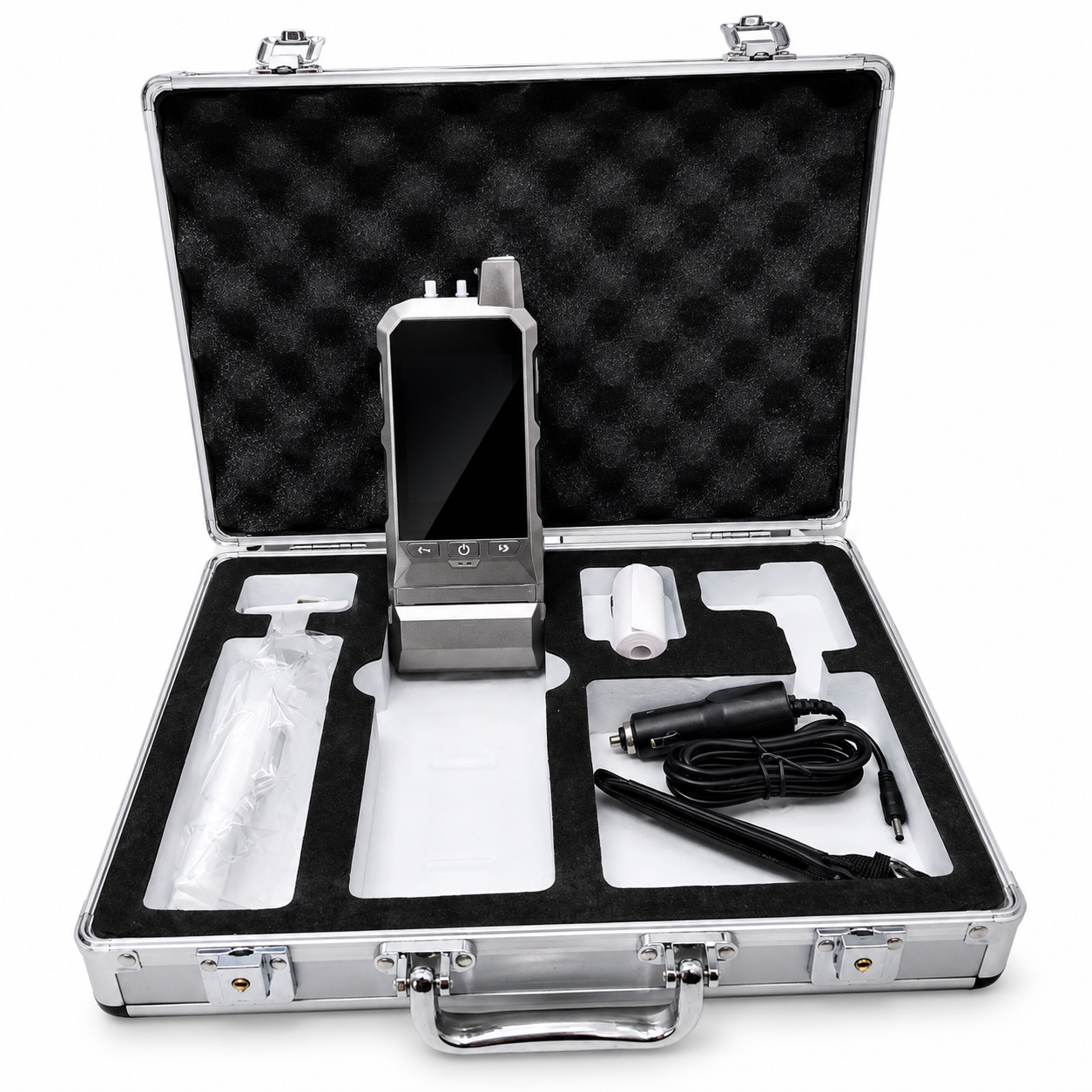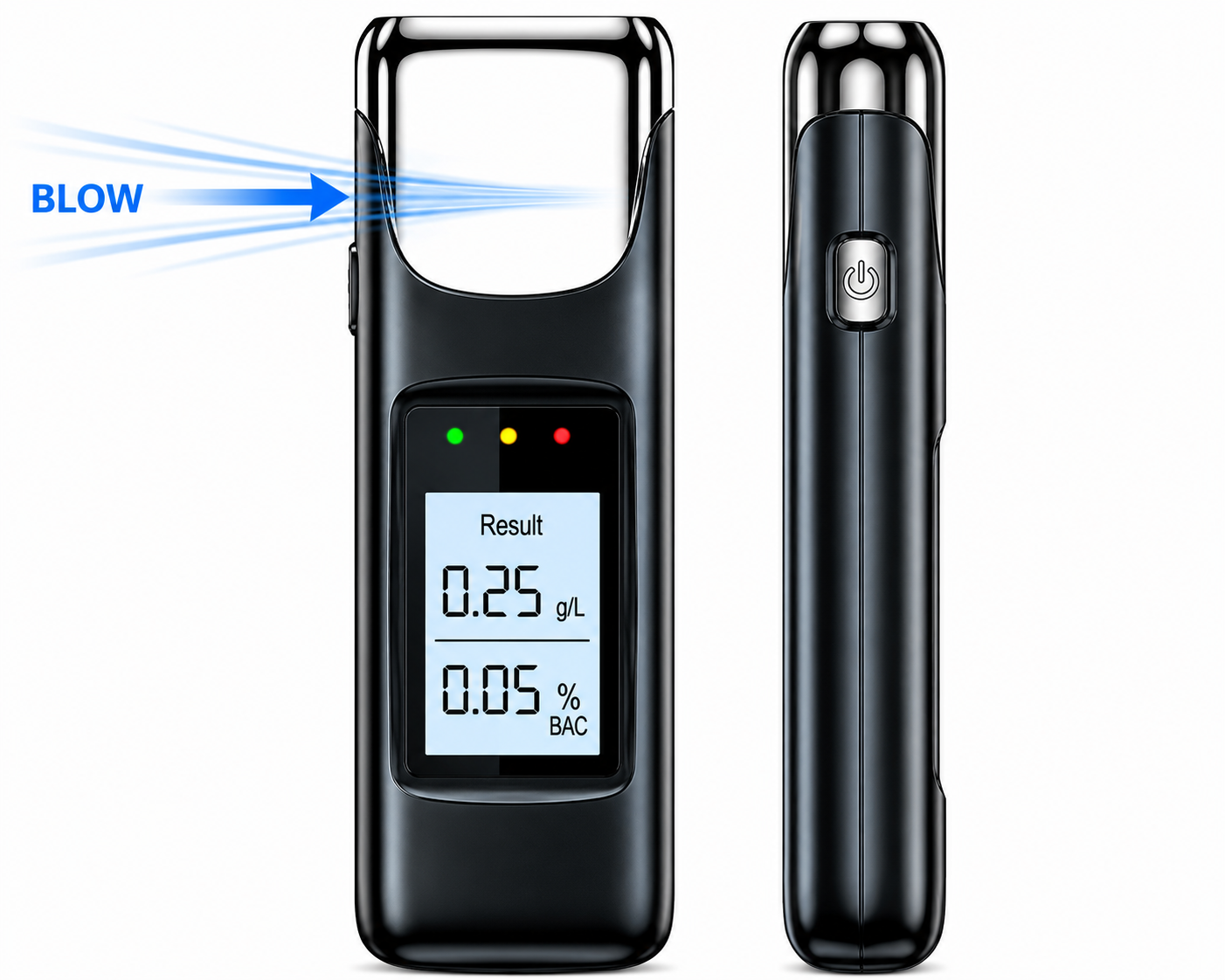

The carton reached the safety office on a Tuesday. Inside it was a breath tester, a strip of mouthpieces, a charging cable and a calibration certificate, and by lunchtime everyone on the floor knew it had arrived.
The questions started before you had opened the manual. Does it pick up last night's drink. What about my cough syrup. Who sees the number. Does a positive reading mean termination. Can you actually make me blow. The maintenance fitter wanted to know whether his diabetes would show up. A contractor's driver wanted to know whether the rule applied to him at all.
You did not have answers, and that is the real problem of the first week. The device works out of the box. The protocol around it does not, and the protocol is yours to run.
Here is what a workforce asks a supervisor in the first seven days, in roughly the order it gets asked, and how to answer it without stopping production.
What the breath tester is actually for
A workplace check is a screening test, not a verdict. It tells you whether a person should be allowed to start work, take a vehicle out, or enter a hazardous area right now. It does not diagnose dependence, it does not prosecute anyone, and it is not court evidence unless it was taken by a police officer under the Motor Vehicles Act, 1988.
That distinction settles most arguments in advance. You are not accusing anyone of a crime. You are applying a fitness-for-duty rule the company has written down, in the same way you apply rules about safety shoes or a valid licence.
Use those exact words when someone bristles: "This is a fitness check for the shift, the same as any other check we do at entry." It defuses more confrontations than any explanation of sensor technology.
"How long after a drink will it still show?"
This is the first question you will be asked, usually by someone who drank the night before and genuinely believes he is clear.
The honest answer is that the body clears alcohol slowly, and the rate varies from person to person with weight, food, health and how much was consumed. A heavy night can still register many hours later. Someone who stopped drinking at midnight is not automatically clear the next day.
What you must not do is negotiate about it. You do not estimate hours and you do not do arithmetic on a worker's behalf. The reading is the reading. If someone wants to know how long he needs, the only truthful answer is that testing is the only way to know, and testing after he has already climbed onto a machine is too late.
The waiting period before a recorded reading
There is one timing rule you must enforce on your own side, and it is the single most common cause of a false alarm: mouth alcohol.
Alcohol lingering in the mouth or throat, rather than coming up from deep lung air, can push a reading far above the person's actual level. It comes from mouthwash, cough syrup, some herbal tonics, breath fresheners, recent food or drink, belching and vomiting.
Standard practice is a deprivation period of fifteen to twenty minutes before an official reading is recorded, with nothing taken by mouth in that window. Build it into the flow: anyone who screens positive on the first pass sits out that period, consumes nothing, and blows again. Most mouth-alcohol false alarms vanish on the second test.
"Does a breathalyzer detect one drink?"
Yes. A fuel-cell breath tester will usually register a single drink taken recently, and that is exactly what you want in a workplace where the operating rule is zero rather than "under the limit".
This decides how your policy reads:
- Zero-tolerance rule. Any positive reading is actionable for driving, machine operation, work at height, confined-space entry and hot work. No threshold argument is possible.
- Road-limit rule. If you mirror the statutory driving limit for drivers, the policy must state the number, and your device must display a value rather than a pass or fail light. Section 185 of the Motor Vehicles Act, 1988 sets the limit at 30 mg of alcohol per 100 ml of blood.
Decide which rule you are running before your first day of testing. Supervisors who invent a threshold on the spot lose the argument every time.
The first positive reading: the next ten minutes
Have this sequence printed and laminated at the check point, because you will not want to improvise it while a queue builds behind you.
Step Action
1 Move the person aside quietly. No announcement, no crowd.
2 Stop them from starting work, driving, or entering the plant. This is the only urgent part.
3 Wait the full 15 to 20 minutes with nothing by mouth.
4 Retest with a fresh mouthpiece, ideally with a witness present.
5 Record both readings, both times, the device serial number and the witness name.
6 Hand over to HR or the shift manager as the policy directs.
Discipline is not on that list. Your job is to stop the risk and record the facts. What follows is an HR process, and keeping the two separate is what protects you personally.
Also decide in advance how the person gets home. A worker who is stopped and then sent off on his own two-wheeler is a risk you created. Most policies keep the person on site in a supervised area or arrange transport.
"The machine is wrong": handling a disputed reading
Someone will say the device is faulty. Occasionally they will be right, which is precisely why the retest exists.
A reading is credible when four things are true:
- The deprivation period was observed in full.
- A fresh mouthpiece was used.
- The device is within its calibration date.
- A second reading agrees with the first.
If any one of those fails, the disputed reading is weak and you should treat it as weak.
This is the strongest argument for keeping a second unit on a large site. When a result is challenged, retesting on an independent device ends the conversation in two minutes instead of two days. It also protects the honest worker who really did use a medicated mouthwash.
Keep the calibration certificate in a file where testing happens, not in a head-office cupboard. The first time a reading is formally challenged, that sheet of paper is the first thing you will be asked for.
The medical questions you will get
The fitter with diabetes was not being difficult. Semiconductor sensors can respond to substances in breath other than ethanol, which is why cheap devices are unsuitable wherever a reading has consequences. Fuel-cell sensors respond to alcohol specifically and are far less prone to this.
If a worker raises a medical condition or a prescribed medication, note it, retest properly, and route it to HR and the occupational health doctor rather than settling it yourself at the point of check.
"Can you force me?" What a refusal means
Refusal is the situation supervisors handle worst, because instinct says to insist.
Do not insist physically. Do not block a person, seize a badge, or turn it into a scene in front of a queue. Apply the rule that should already exist in your policy: a refusal to test is treated the same as a positive result for the purpose of entry and duty allocation. The person does not start work, does not take a vehicle, and the refusal is recorded with time and witness.
That rule must exist in writing before the first refusal, communicated at induction and acknowledged in employment terms or the contractor agreement. Without it you are asking for consent on the spot, and consent can simply be declined.
On public roads the position is different. Under the Motor Vehicles Act, 1988 a police officer may require a driver to submit to a breath test, and refusal is itself an offence. A private employer has no such statutory power at a private entrance, which is exactly why your authority has to come from policy.
"Does this apply to contractors?"
It has to, or it will not survive an audit. Mixed workforces are where screening policies usually fail: the company's own employees blow, the labour contractor's crew walks past, and the first incident involves the crew that was never covered.
Write testing into the contractor's scope of work. Test at the same point, with the same device, on the same records, and require the contractor's supervisor to be present for a positive result on his own worker.
Which breath analyser is the best for workplace screening?
"Best" depends on what your check point has to accomplish in the twenty minutes around a shift change.
Fuel-cell sensor Semiconductor sensor
Specific to alcohol Yes Can respond to other breath substances
Accuracy over repeated use Holds well Drifts faster
Suited to consequence-bearing checks Yes No
Typical use Workplaces, fleets, enforcement-style screening Personal awareness
Beyond the sensor, judge a device on how it behaves in a queue rather than on its specification sheet:
- Fast recovery between blows. A unit with a long reset cannot clear two hundred people.
- Contactless or passive mode for the first pass, with a mouthpiece test to confirm anything suspicious. This cuts both time and hygiene objections.
- Rechargeable operation, with a spare battery or power bank kept at the point of check.
- Disposable mouthpieces in quantity, with a visible bin. Workers who watch a fresh mouthpiece being opened argue less.
- Stored records or a printer if clients, contractors or insurers want an audit trail.
- A stated calibration interval and a supplier who will actually service the unit in India.
A rechargeable portable AlcoBreath unit with fuel-cell sensing and disposable mouthpieces is the sensible starting configuration for a single entry point. Larger sites are usually better served by one unit per entry point plus a spare held by the safety office for disputes and audits.
Are home breath tests accurate?
Families ask this, and so do workers who want to check themselves before leaving home.
A good personal breath tester is accurate enough for a decision like "do not drive" or "do not report for duty". It is not accurate enough to justify driving after drinking because the display showed a low number. Inexpensive semiconductor devices in particular can read low on a person who should not be behind the wheel, and they can read high after a mouthwash.
Say that plainly to your workforce. A personal device is a stop signal, never a permission slip. If someone tells you his own tester showed zero, that is not a reason to skip the check.
Is there a tester for bad breath?
Yes, but it is a different instrument. Halitosis testers measure volatile sulphur compounds produced in the mouth. They have nothing to do with alcohol screening, and an alcohol breath tester will not flag bad breath.
The reverse point matters more on site: odour is not evidence. A person can smell of last night without registering, and can register without smelling of anything. Test, do not sniff.
Keeping the device trustworthy
A breath tester earns its authority from maintenance, not from the box it came in.
- Charge it on a fixed routine, not when it dies mid-queue.
- Store it dry, out of direct heat and away from dust and fuel vapour.
- Never test through a cracked or reused mouthpiece.
- Note the calibration due date on the device itself and diarise it a month ahead.
- Log the serial number against every recorded reading so a challenge can be traced to a specific unit.
An uncalibrated device is worse than no device, because it produces numbers that look official and cannot be defended.
Your first-week checklist
- Written policy stating the threshold, who gets tested, how selection works, and that refusal equals a positive.
- Policy communicated at induction and to contractors, in writing.
- Laminated protocol with the retest sequence at the point of check.
- Calibration certificate held where testing happens.
- Mouthpieces stocked, bin in view, spare battery charged.
- Register with date, time, name, reading, device serial and witness.
- One named person in HR who takes the handover, and a decision on how a stopped worker gets home.
Get those in place and the device becomes routine within a fortnight. Skip them and a single disputed reading will cost more time than a year of screening saves.
If you are setting up screening from scratch, settle two things this week: your threshold, and who owns the handover after a positive result. The breath tester itself is the simplest purchase you will make around that decision.
 15,000