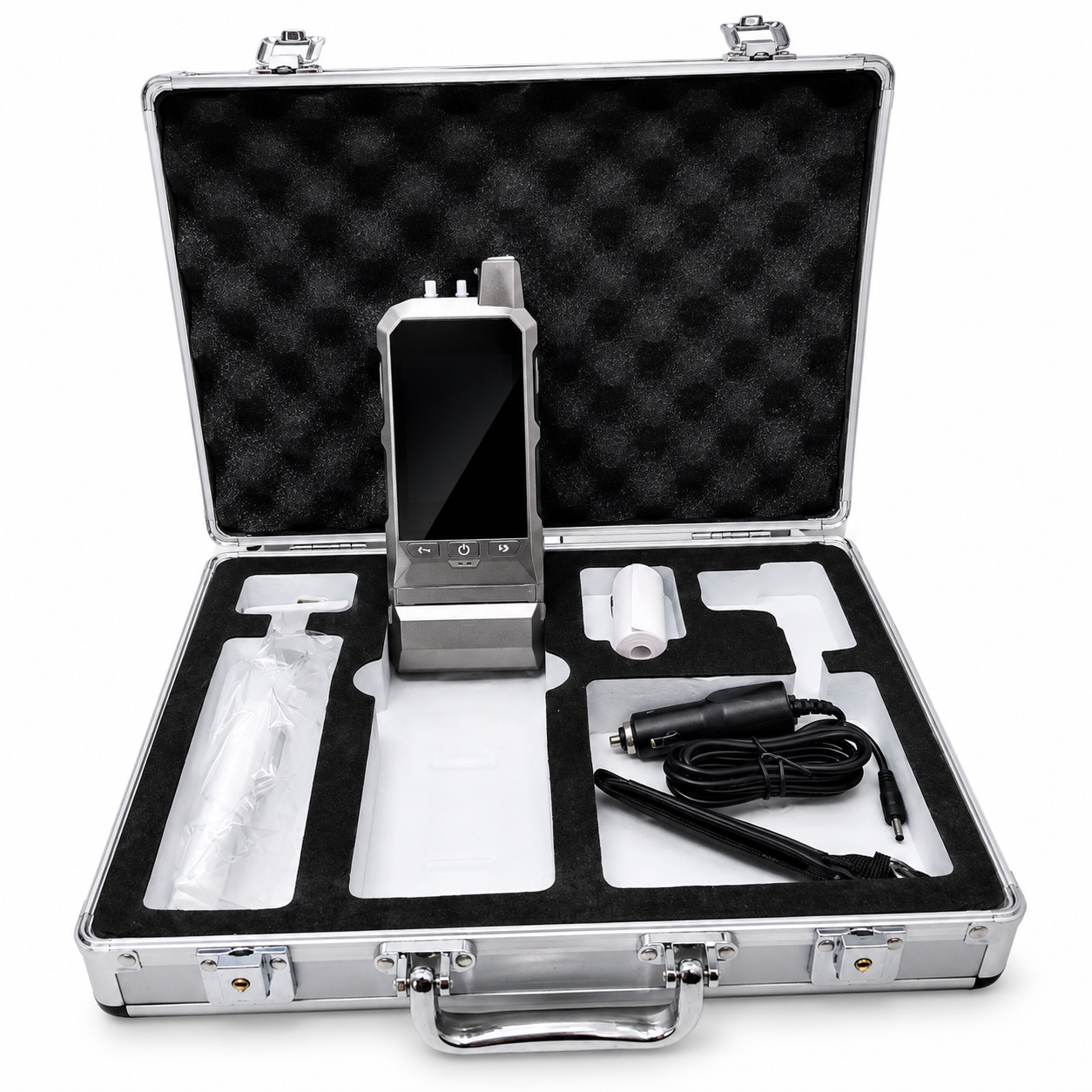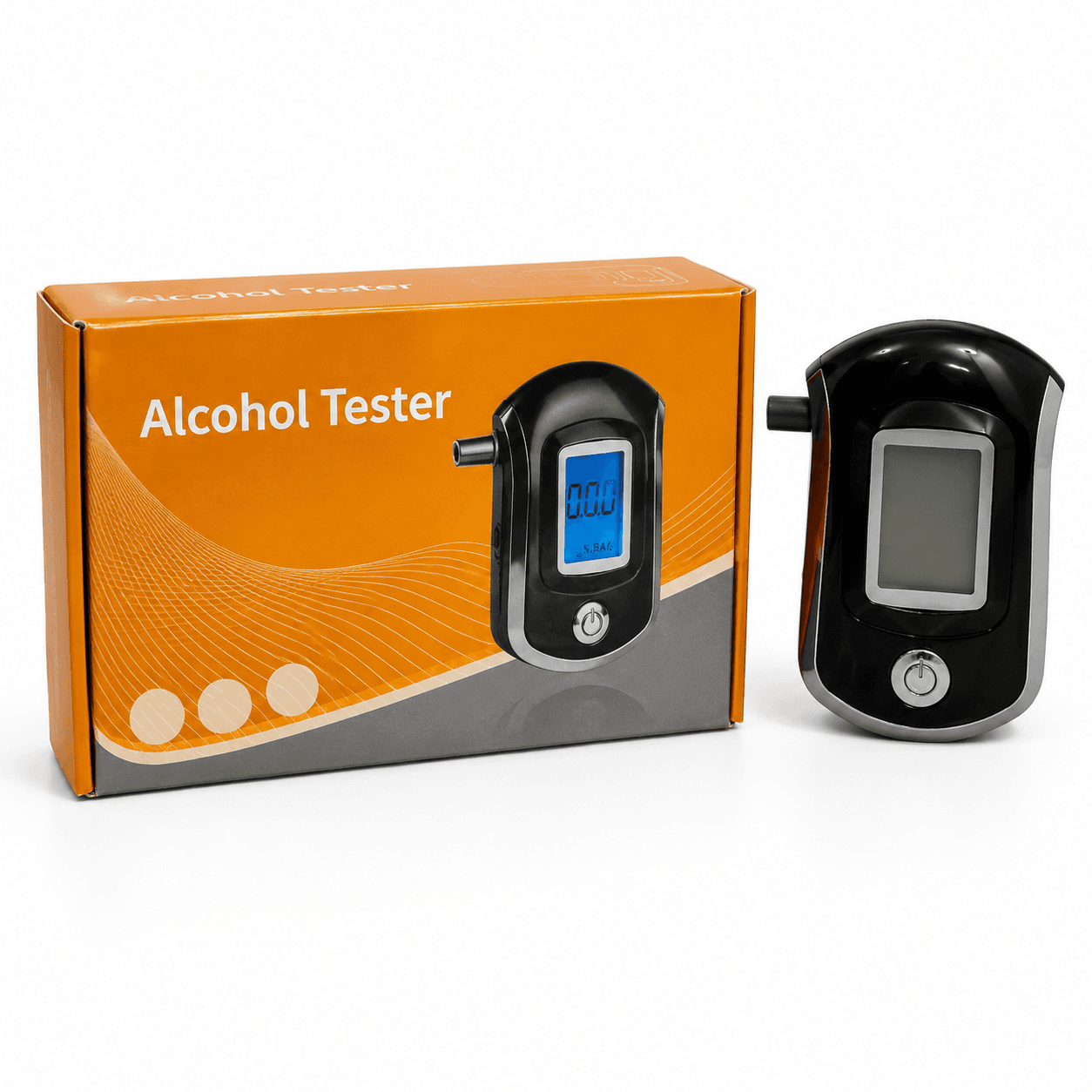

A home breath alcohol analyzer is a compact device that estimates your blood alcohol concentration (BAC) from a sample of deep lung air. You blow into a mouthpiece or sensor port for a few seconds, and the display shows a reading in percentage BAC or mg/L of breath. Used correctly, it gives you an objective number instead of a guess about whether you are still under the influence.
That said, a personal breathalyser is a decision-support tool, not a legal clearance certificate. This guide explains the sensor technology inside these devices, what accuracy claims actually mean, how to test yourself properly, and what to check before you buy one in India.
What a Home Breath Alcohol Analyzer Actually Measures
The device does not measure alcohol in your blood directly. It measures alcohol vapour in the air coming from your lungs, then converts that value using a fixed blood-to-breath ratio.
Alcohol absorbed into your bloodstream passes into the alveoli of the lungs and evaporates into the air you exhale. The concentration in that deep lung air correlates with the concentration in blood, which is why breath testing works at all. The conversion is standardised, so individual variation in body chemistry introduces some error.
Readings are usually shown in one of three formats:
Unit Typical display What it means
% BAC 0.030 Grams of alcohol per 100 ml of blood
mg/L breath 0.15 Milligrams of alcohol per litre of exhaled breath
mg/100 ml blood 30 The unit referenced in Indian drink-driving rules
Under the Motor Vehicles Act, the permissible limit in India is 30 mg of alcohol per 100 ml of blood. Many devices sold here can toggle between units, which is useful because enforcement figures are quoted in mg/100 ml while most consumer devices default to % BAC.
Fuel Cell vs Semiconductor Sensors
Sensor type is the single biggest factor in how much you can trust a reading. Two technologies dominate the consumer market.
Semiconductor (MOS) sensors
A heated metal-oxide film changes electrical resistance when alcohol vapour contacts it. These sensors are inexpensive, which is why most budget testers use them.
The trade-off is selectivity. Semiconductor sensors can respond to other substances in breath such as acetone, cigarette smoke residue, mouthwash vapour, and some food odours. They also drift faster and are more sensitive to temperature and humidity.
Electrochemical fuel cell sensors
A fuel cell oxidises ethanol at a platinum electrode and produces a small electrical current proportional to the alcohol present. Because the reaction is specific to alcohol, interference from other compounds is much lower.
Fuel cell units cost more but hold calibration longer and give repeatable results across the range that matters. Professional and police-grade instruments use this technology almost exclusively. If you want a home breath alcohol analyzer for anything beyond curiosity, a fuel cell model is worth the extra spend.
Quick comparison
Factor Semiconductor Fuel cell
Cost Lower Higher
Selectivity to ethanol Moderate High
Drift over time Faster Slower
Calibration interval More frequent Less frequent
Best for Rough pass/fail indication Numeric readings you plan to act on
How to Use a Personal Breathalyser Correctly
Most inaccurate home readings come from user error, not the device. Follow a consistent routine.
- Wait at least 15 to 20 minutes after your last drink. Residual alcohol in the mouth inflates readings dramatically.
- Avoid mouthwash, breath sprays, cough syrup and paan masala before testing. Many contain ethanol.
- Do not smoke immediately before a test. Smoke particles can foul some sensors.
- Use a fresh or cleaned mouthpiece and check the device is at room temperature.
- Blow steadily for the full duration prompted, usually 4 to 6 seconds, without stopping. A weak or interrupted blow may capture upper-airway air instead of deep lung air and under-report.
- Wait for the sensor to reset between tests. Back-to-back blows on a warm sensor can skew the second reading.
- Take two readings a few minutes apart. If they differ widely, something is wrong with the technique or the device.
Non-contact testers, where you blow across a sensor without a mouthpiece, are convenient for screening groups but generally less precise because the sample is diluted with room air.
Accuracy, Calibration and Realistic Expectations
Manufacturers usually state accuracy as a tolerance, for example plus or minus 0.01% BAC at a specified reference value. That tolerance applies only when the unit is properly calibrated and used within its stated temperature and humidity range.
All alcohol sensors drift. Calibration restores the reference point by exposing the sensor to a known alcohol concentration and adjusting the output. Typical guidance is calibration every 6 to 12 months, or after a set number of tests, whichever comes first. Check what the manufacturer specifies and whether calibration service is available in India before you buy, because a device that cannot be recalibrated becomes disposable.
Things that can distort a reading:
- Testing too soon after drinking, eating or using an ethanol-based product
- Alcohol still being absorbed, so BAC is rising and a later test reads higher
- Very cold or very hot ambient conditions
- Low battery voltage on some models
- A sensor past its service life
- Diabetic ketoacidosis or ketogenic diets producing acetone, which mainly affects semiconductor sensors
Treat any result near the legal limit as a reason not to drive at all. The safe interpretation of a borderline number is always the conservative one.
What to Look For When Buying in India
Use this checklist rather than headline price alone.
- Sensor type stated clearly. If the listing does not say fuel cell, assume semiconductor.
- Display units. Ability to switch to mg/100 ml matches the Indian legal reference.
- Warm-up and recovery time. Faster recovery matters if several people will test.
- Mouthpiece supply. Confirm replacements are available; hygiene matters for shared use.
- Calibration policy. Interval, cost, turnaround and whether service exists locally.
- Power source. Rechargeable units avoid the reading drift that comes with weak dry cells.
- Memory and logging. Useful if you are tracking your own patterns over time.
- Warranty and documentation. A test certificate or calibration certificate with the unit is a good sign.
For workplace or fleet use, requirements are stricter: higher test volume, tamper resistance, printer or data export, and a documented calibration schedule. A consumer-grade home breath alcohol analyzer is not built for that duty cycle.
Home Device vs Police Breathalyser
A police evidential instrument is a different class of equipment. It is type-approved, calibrated on a fixed schedule with certified reference gas, operated under a defined procedure, and its output can be used as evidence.
Your personal device is not type-approved and its reading carries no legal weight. If a home unit reads below the limit but an enforcement instrument reads above it, the enforcement result stands. Use your device to decide whether to hand over the keys, never to argue a case.
Who Benefits From Owning One
- Social drinkers who want a factual check before driving home the next morning
- People monitoring their own consumption as part of a reduction plan
- Parents and households wanting a straightforward screening tool
- Small businesses doing informal pre-shift checks, though these should move to professional-grade equipment as testing volume grows
The common thread is using a number to replace a feeling. People consistently underestimate how long alcohol takes to clear, especially after a late night. The body eliminates alcohol at a roughly fixed rate that coffee, cold showers and food do not accelerate. A breath test the following morning is often the most useful test anyone performs.
Key Takeaways
A home breath alcohol analyzer gives you a fast, objective estimate of BAC when you use it correctly. Choose a fuel cell sensor if you intend to act on the numbers, wait 15 to 20 minutes after your last drink, keep the device calibrated, and treat borderline readings as a stop signal. It is a tool for making a safer decision, not a permit to drive.
 15,000