
By Manish Verma, Founder, AlcoBreath ya Alcohol testing specialist
A tender questionnaire from a multinational client lands on a transport manager's desk in Pune. Question 14: Are your vehicles fitted with alcohol interlock systems or equivalent controls? The honest answer is no, and the manager now has to decide whether to write that, or to write something better.
That question is becoming common in India, usually copied from a global EHS template written for Europe or North America. It is worth understanding exactly what alcohol interlock systems do before you either buy one or explain why you have not. Because for most Indian fleets, the right answer is not an interlock. It is a documented screening programme that a client auditor can actually inspect.
What an alcohol interlock system actually is
An alcohol interlock, often called a BAIID (breath alcohol ignition interlock device), is a breath testing unit wired into a vehicle's ignition circuit. The driver blows into a handset before the engine will crank. If the breath alcohol reading is above a preset threshold, the starter stays locked out.
Most units also demand rolling retests while the vehicle is moving, so a driver cannot have someone else provide the first sample and then drive away. Failed or skipped retests trigger the horn and hazard lights rather than cutting the engine, since killing a moving vehicle creates a worse hazard than the one being prevented.
Every event is logged with a timestamp. In countries that run formal interlock programmes, that log is downloaded at a service centre every few weeks and read by a supervising authority.
Why the BAIID model has not taken root in India
Indian drink-driving law sits in the Motor Vehicles Act, section 185, which makes it an offence to drive with more than 30 mg of alcohol per 100 ml of blood, equivalent to 0.03 per cent BAC. Enforcement is roadside, by police, with a breath analyser. The penalty is fine and imprisonment on conviction, and licence consequences follow.
What India does not have is a nationwide court-supervised interlock programme of the kind that exists in several US states, Canada and parts of the EU, where a convicted driver is ordered to drive only an interlock-fitted vehicle for a fixed period and a service provider monitors the logs. Without that legal scaffolding, there is no calibration network, no monitoring authority and no official device approval list to anchor an interlock market here.
So an Indian fleet fitting interlocks is doing it voluntarily, bearing the full cost of import, installation, servicing and dispute handling, with no regulatory recognition for the effort. Some mining contractors and a few hazardous goods operators do it anyway. Most should think harder.
The practical problems with interlocks on an Indian fleet
Vehicles move between drivers. An interlock locks a vehicle, not a person. In a yard where trucks are allocated by availability each morning, the control you actually want is on the driver before allocation.
Service and calibration are local problems. A fuel cell sensor drifts and needs periodic recalibration. An interlock that has not been serviced in a year is a liability dressed as a control, and a vehicle that will not start because of a faulty handset is a delivery that does not happen.
Cold starts and genuine false positives. Mouthwash, some cough syrups and even a recently eaten fermented food can push a mouth-alcohol reading above threshold for a few minutes. An interlock handles this with a retest after a wait. A supervisor at a gate handles it by waiting fifteen minutes and testing again, which is faster and better documented.
The interlock tells you nothing about staff who do not drive. Crane operators, forklift drivers, boiler attendants and warehouse pickers are all exposure points an ignition interlock cannot reach.
The formats that carry the same load on Indian sites
If the aim is to stop an impaired person from operating something dangerous, the device does not have to be bolted to a steering column. These are the formats in actual use across Indian workplaces, and there are proper alcohol testing machines in each category.
Wall mounted breathalyzer units
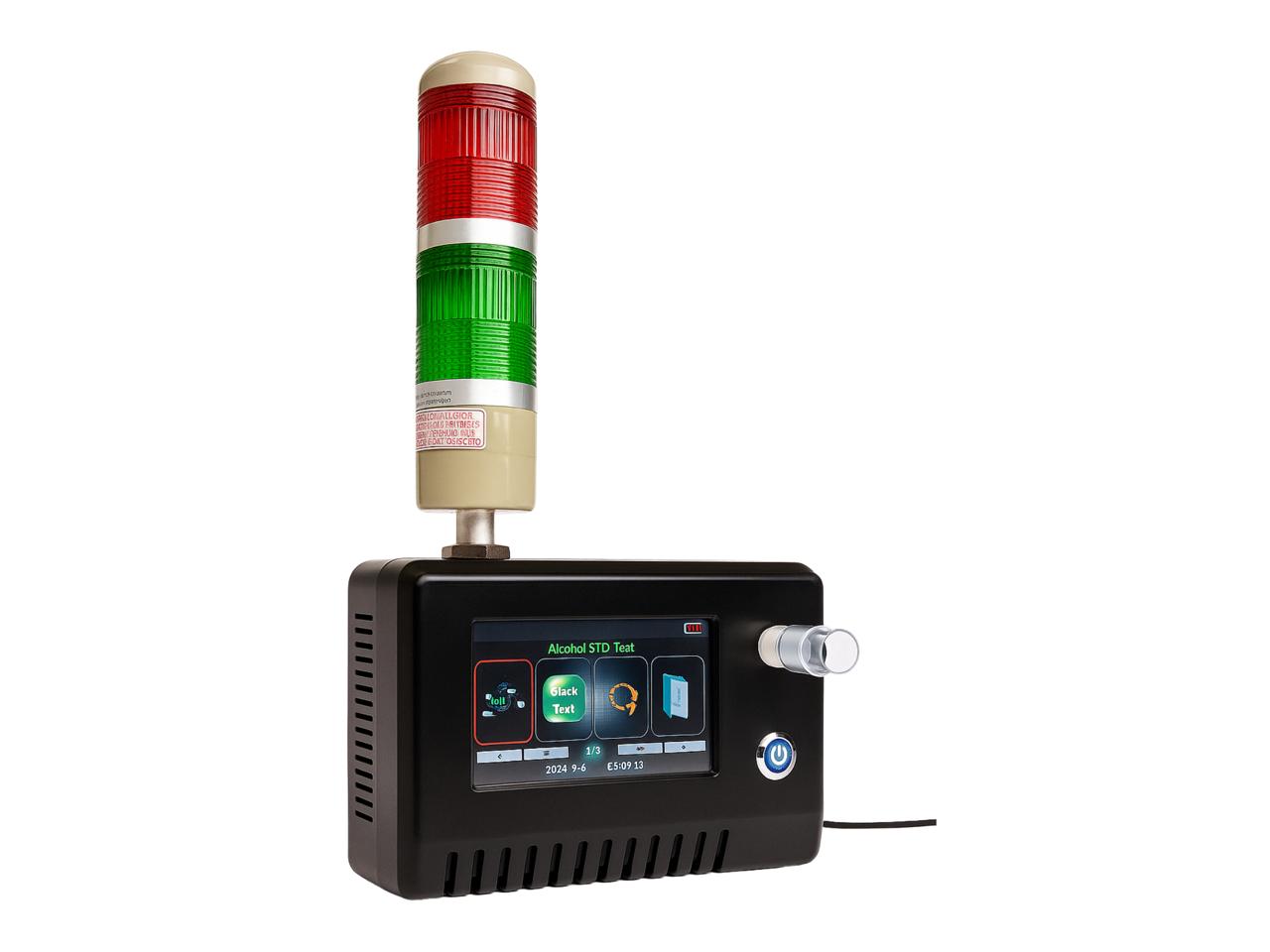
A wall mounted breathalyser sits at a gate, muster point, control room or crew room and tests continuously through a shift change without a supervisor holding anything. Some are self-service with a pass or fail indication; others print or log every result for the records. For a depot pushing 200 drivers through in forty minutes, a fixed wall mounted breathalyzer removes the queue that a single handheld creates.
Coin operated breathalyzer and vending formats
In hospitality, the control is on the guest, not the employee. A coin operated breathalyzer in a hotel lobby, club foyer or highway dhaba lets a person check themselves before deciding to drive. A breathalyzer vending machine of this type is a public-facing nudge rather than an enforcement tool, and venues that install one are making a visible statement about their own duty of care to departing guests.
It will not replace a staff screening policy, and it should never be presented to an auditor as one.
Single use breathalyzer strips and tubes
A single use breathalyser is a disposable chemical device: a crystal tube or strip that changes colour when breath alcohol crosses a set level. Products sold as alcoscreen, alco screen and the breathscan alcohol detector all work on this principle. They need no power, no calibration and no training beyond reading the instructions.
That makes a single use breathalyzer genuinely useful as a backup in an ambulance, a remote site vehicle, a night supervisor's drawer or an event kit. It is a yes/no indication at a threshold, not a number, so it cannot support a graded policy or a disciplinary file on its own.
Handheld fuel cell analysers
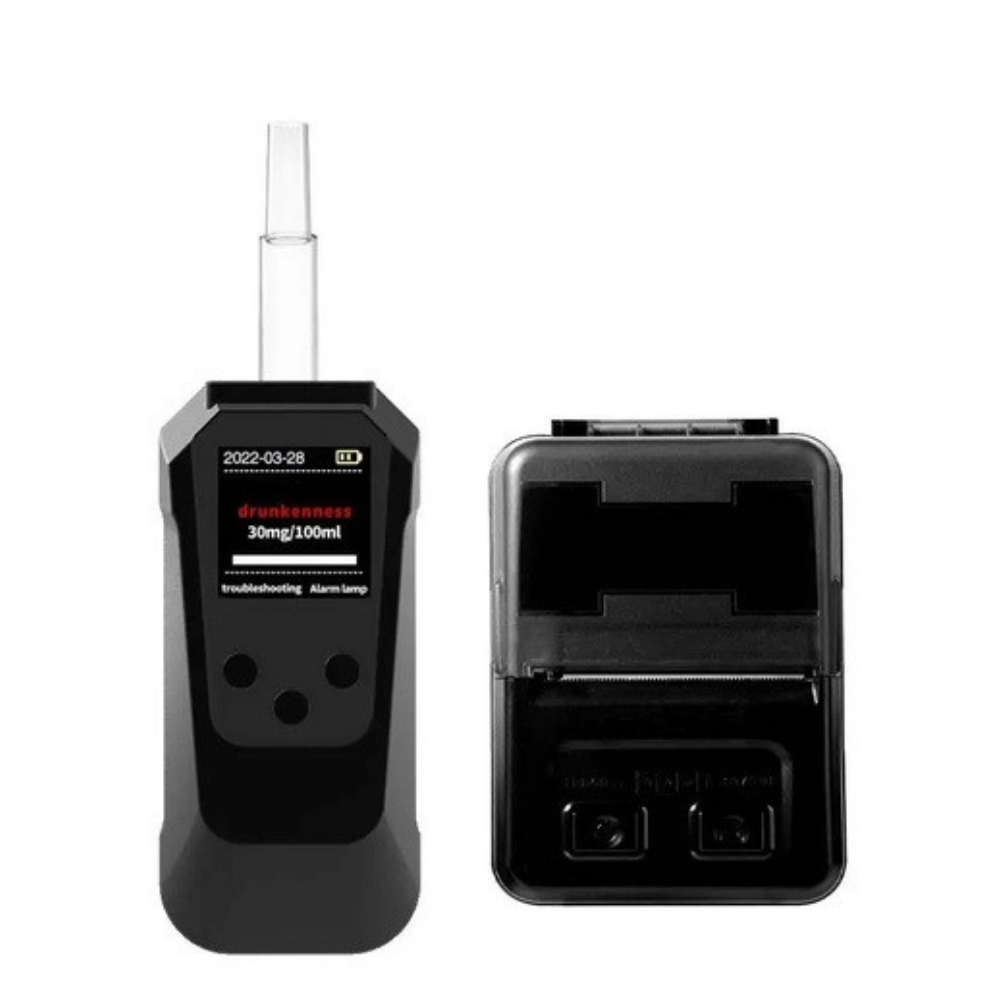
For most operators this remains the workhorse. A fuel cell handheld gives a numeric reading, can be carried to the worker instead of the other way round, and supports random checks away from the gate. That mobility is the whole argument for portable alcohol monitoring in sites where there is no single entry point to defend.
Comparing the options honestly
Format — Controls — Needs calibration — Gives a number — Best fit
Alcohol interlock / BAIID — The vehicle — Yes, by a service agent — Usually internal only — Dedicated single-driver vehicles, high-hazard transport
Wall mounted breathalyser — Everyone passing a point — Yes — Depends on model — Depots, plant gates, control rooms
Coin operated breathalyzer — Self-selecting public — Yes — Usually a reading — Hotels, bars, clubs, event venues
Single use breathalyser — One test, one person — No — No, threshold only — Backup kits, remote vehicles, emergency use
Handheld fuel cell unit — Wherever you take it — Yes — Yes — Fleets, factories, construction, random checks
Writing a policy an auditor will accept
Whichever format you choose, the device is the smallest part. What the client questionnaire is really probing is whether you have a rule, apply it consistently, and can show records.
A workable policy states who gets tested and when, the threshold that triggers action, and what happens on a positive. Keep the threshold at or below the section 185 limit of 30 mg per 100 ml for anyone who will drive; many Indian sites run a zero-tolerance standard for plant operators because the legal road limit was never designed for a man on a forklift.
Build in a confirmation step. A second test after fifteen minutes, with the mouth rinsed with water, separates mouth alcohol from blood alcohol. If a worker disputes the result and the consequence is serious, the escalation is a blood test for alcohol detection at a recognised laboratory, which is the evidence that actually stands up.
Train supervisors to read the display properly. A reading is meaningless to the person holding the device unless they know what the alcohol breath analyser level is expressed in and what action it maps to.
Where interlocks still make sense
There are narrow cases worth the trouble. A tanker assigned permanently to one driver. A mine haul truck that never leaves a leased pit. A school bus operator who wants a visible, non-negotiable barrier that parents can see in the specification. In those situations, specify the sensor type, write the service interval into the contract, and confirm who recalibrates and how fast a failed unit gets replaced.
For everyone else, the money goes further in screening people rather than locking vehicles. Comparing what you get at each level of spend is covered in detail in this breakdown of alcohol analyser price in India, and the selection criteria that matter by site type are set out in best alcohol breathalyzer in India.
And for families rather than fleets, the same thinking applies in miniature: a tested device in the glovebox settles an argument before the car moves, which is the whole point of an alcohol tester for car.
The answer to question 14
Write the truth, then write what you do instead. "No interlocks fitted. All drivers screened before shift allocation using fuel cell breath analysers at the depot gate, results logged, threshold 0.00, confirmation protocol and disciplinary process documented in SOP X."
That answer passes more audits than an interlock nobody serviced.
 9,500
9,500