
By Manish Verma, Founder, AlcoBreath ya Alcohol testing specialist
The question usually arrives attached to someone else's deadline. A client's vendor pre-qualification form lands in a transport manager's inbox, and one question asks how drivers are screened for alcohol before duty, with evidence to support the answer. Contract renewal is three weeks away. The first thing most people type is "alcohol testing centers near me", because a centre feels like proof you can attach to a form.
Sometimes it is. But for the majority of Indian employers asking that question, the search answers only half the problem, and usually the smaller half.
The short answer
A testing centre is the right choice when you need a documented, lab-grade result for a specific person on a specific day: pre-employment screening, a post-incident investigation, a medico-legal matter, or a case that may end up in front of a disciplinary panel or a court.
It is the wrong choice when you need to know whether 40 drivers are fit to start at 6 a.m. tomorrow, and again the day after. That job belongs at your own gate, with your own device, under your own policy.
Most organisations need both. The mistake is buying one and assuming it covers the other.
What a centre gives you, and what it cannot
— Alcohol testing centre / diagnostic lab — On-site breath screening
What it measures — Blood alcohol, or urine markers such as EtG depending on the test ordered — Breath alcohol, expressed as BAC equivalent
Turnaround — Hours to days, depending on the test and the lab — Seconds
Where the person is — Away from site, in travel time — At the gate, before duty starts
Best use — Pre-employment, post-incident confirmation, disputes — Daily or random pre-shift screening
Practical limit — Cost and time per person; cannot be done at scale every morning — Screening result, not a laboratory certificate
The distinction matters because the two tests answer different questions. A breath screen answers "is this person fit to work right now?" A lab test can answer "what was in this person's blood at the time the sample was drawn?" and, with the right test, "has this person been drinking in the last few days?" If you are unsure which test proves what, the comparison in Breathalyzer Test vs Other Alcohol Tests: What Each One Proves is worth reading before you commit to a process.
Four times a centre near you is genuinely the right call
Pre-employment screening. If your policy screens new hires before confirmation, a lab panel done once per candidate is reasonable. It is a one-off cost against a long employment.
After an incident. A collision, a fall from height, a forklift strike. Here you want a chain of custody, a signed report and a result that survives scrutiny. Send the person for a lab test, and record the on-site screening result that prompted it.
A disputed result. A driver who insists the handheld reading was wrong has a right to be taken seriously. A confirmatory test at a recognised centre settles it, and the willingness to offer one is what makes your policy defensible.
Contractual or statutory audit evidence. Some clients, particularly in oil and gas, mining and large infrastructure, ask for lab-backed testing for defined categories of staff. Read the clause carefully; many of them ask for a screening programme, not a laboratory programme.
Why daily screening cannot live at a testing centre
Run the arithmetic once and the answer is obvious. A depot with 60 drivers on a morning dispatch cannot send anyone anywhere. Travel time, waiting time and reporting time all sit in front of a vehicle that is meant to leave at first light.
Even weekly rotation through a centre leaves most of your exposure uncovered, because alcohol-related risk is a today problem, not a last-Tuesday problem. The shift that matters is the one about to start.
This is the gap that searches for a nearby centre tend to miss, and it is covered in detail in Alcohol Testing Near Me: What the Search Finds and What Your Site Actually Needs.
What Indian law expects, especially if vehicles are involved
If your people drive, the legal line is already drawn for you. Under section 185 of the Motor Vehicles Act, 1988, driving with alcohol exceeding 30 mg per 100 ml of blood (0.03% BAC) is an offence, and the law allows enforcement to use a breath analyser at the roadside. Refusing a test carries consequences of its own.
That 0.03% figure is a legal ceiling, not a safety target. Commercial fleets, mining operators and most industrial sites set their own threshold at zero, because a loaded truck or a working crane has no tolerance for impairment that a private car at low speed might absorb.
For your workforce, the practical consequence is simple. If a driver is stopped and tested on the road, the result is the state's, not yours. If you screened him at the gate, the result was yours, and the vehicle never left.
A policy that uses both, in the right order
- Screen on site, every shift or on a published random basis. Record the result, pass or fail, against the person and the time.
- Set one clear threshold and publish it. Zero for drivers, machine operators and anyone working at height is the common choice in India.
- Define what happens on a positive reading. Stand down from safety-critical work, re-test after 15 to 20 minutes to rule out mouth alcohol, then decide.
- Refer to a testing centre only when the situation needs it. Dispute, incident, or policy-mandated confirmation.
- Keep the paperwork. A dated log of screenings is what you attach to that client questionnaire. It is better evidence of a working programme than a handful of lab invoices.
Written this way, the centre near you becomes a supplier you call occasionally rather than a bottleneck you depend on daily.
Choosing a centre: what to check before you book
- Is the lab NABL-accredited for the tests you are ordering?
- Will they collect samples at your site for post-incident cases, or must the person travel?
- Do they issue a report that names the method used, not just a number?
- What is the documented chain of custody, and who signs it?
- What is the realistic turnaround at 10 p.m. on a Sunday, which is when incidents happen?
Ask these before an incident, not during one.
The device that does the daily work
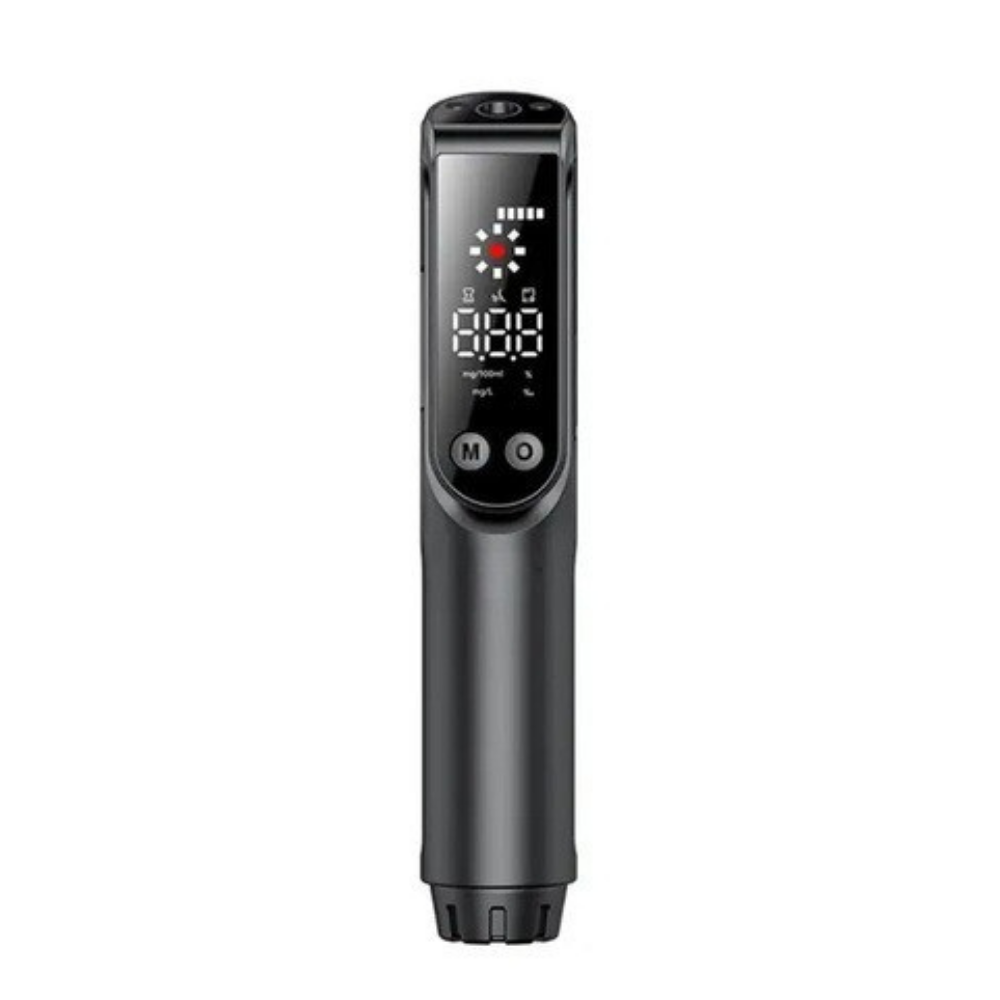
For the screening layer, the equipment decision is narrower than it looks. Fuel cell sensors are the standard for workplace and fleet use because they respond to ethanol specifically and hold accuracy across repeated tests in a single session. Semiconductor units are cheaper and suit occasional personal use, including a unit kept in a car; the trade-offs are set out in Alcohol Tester for Car: What to Keep in the Glovebox and How to Use It.
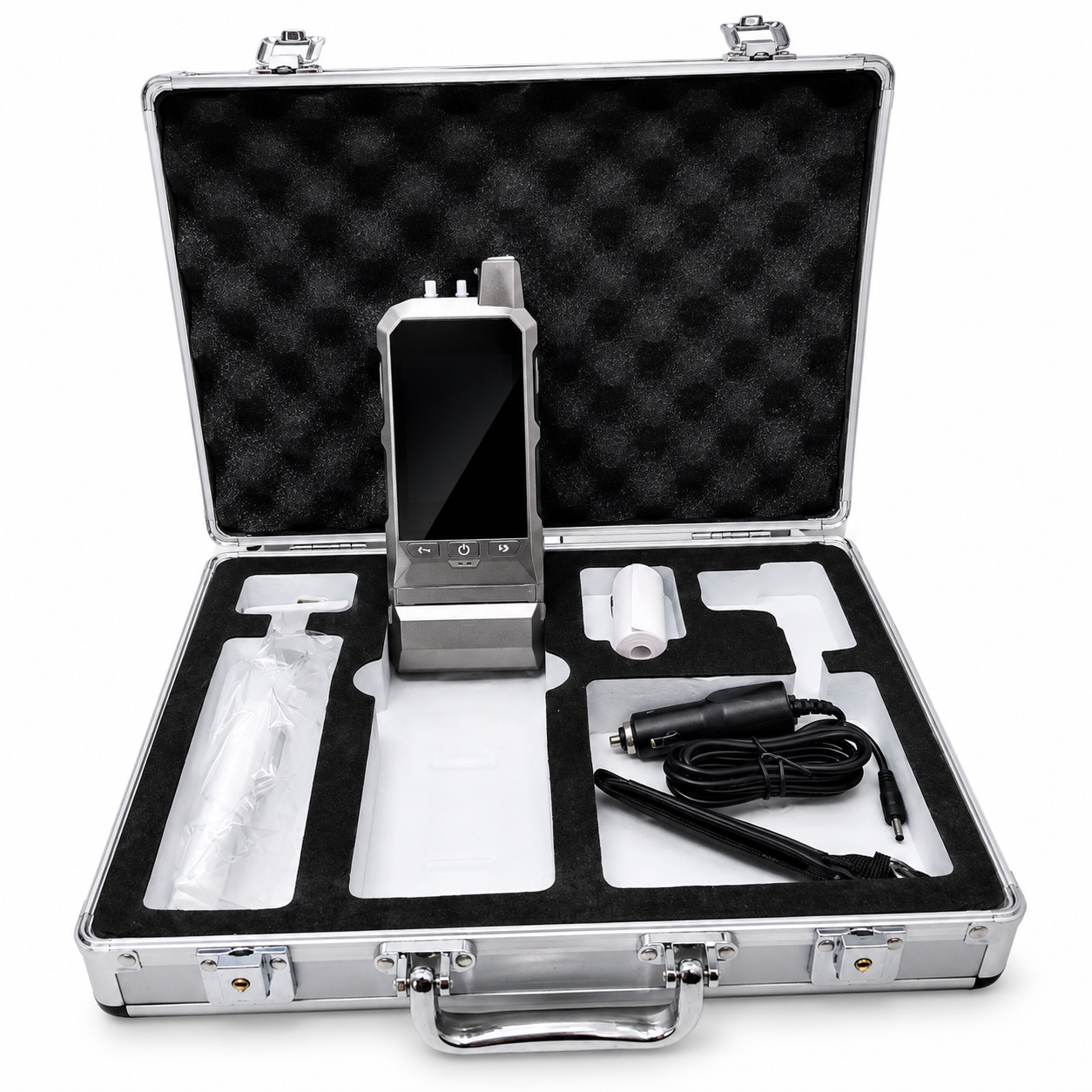
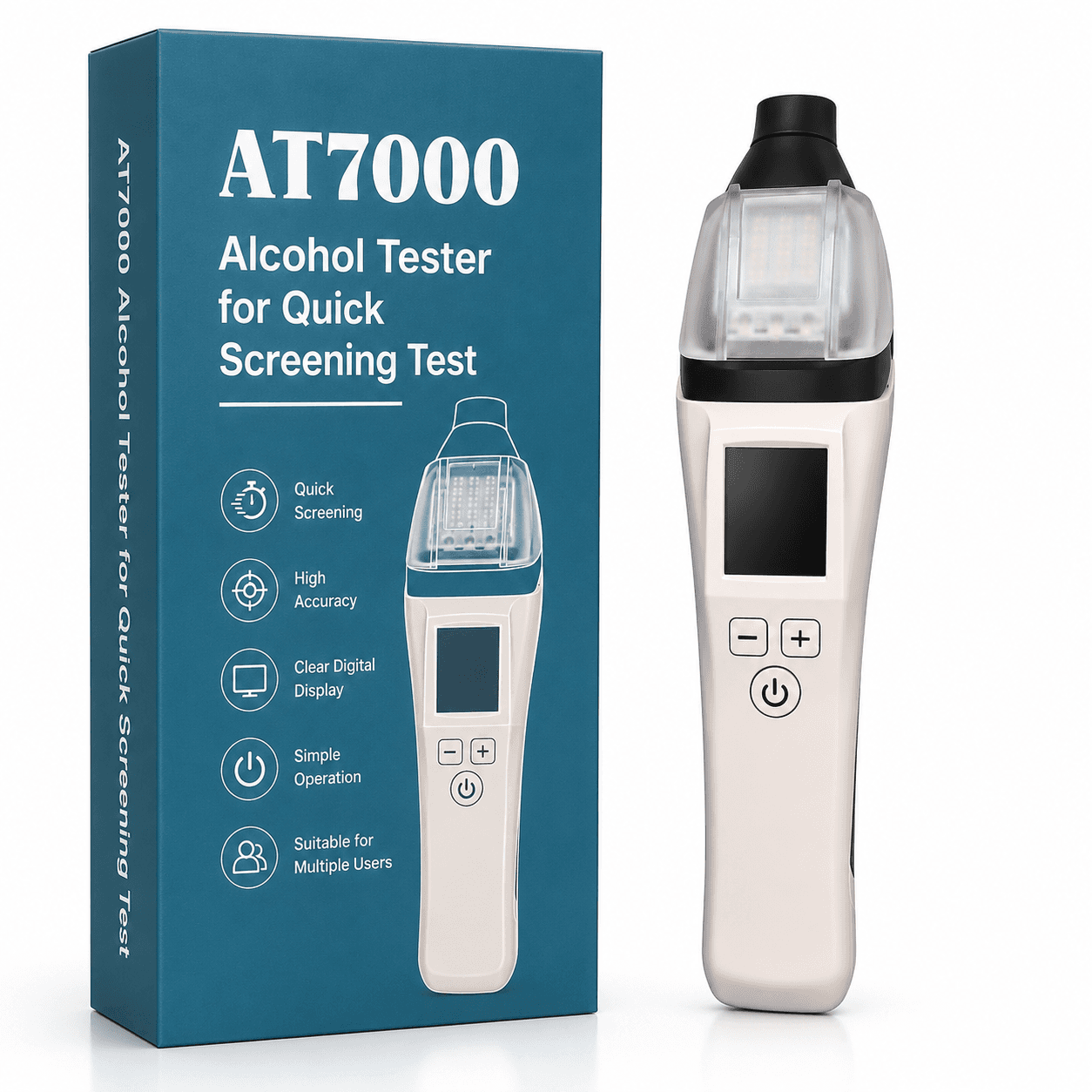
For a gate or a depot, look for a stated calibration interval with a service route to honour it, mouthpiece supply you can actually reorder, and a printer or data export if you need records. You can compare alcohol testing machines by sensor type and throughput before raising a requisition, and if you are preparing a purchase note for approval, Buy Alcohol Breath Tester: What to Settle Before You Raise the PO covers the questions finance will ask.
One more point that saves arguments later: understand what a zero reading does and does not mean, and how long after a drink a device will still register. Alcohol Breath Test Normal Range: What Zero Actually Means explains the thresholds your supervisors will be enforcing.
Who carries the consequence
When a loaded vehicle leaves a yard with an impaired driver, the consequence does not stay with the driver. It reaches the transport manager who dispatched him, the contractor whose name is on the vehicle, the client whose goods are on board, and the family on the road alongside.
A testing centre near you is a useful service. It is not a screening programme. The programme is the device at your gate, the threshold on your notice board, and the log that shows you have been doing this every day, not just on the day somebody asked.
 20,000