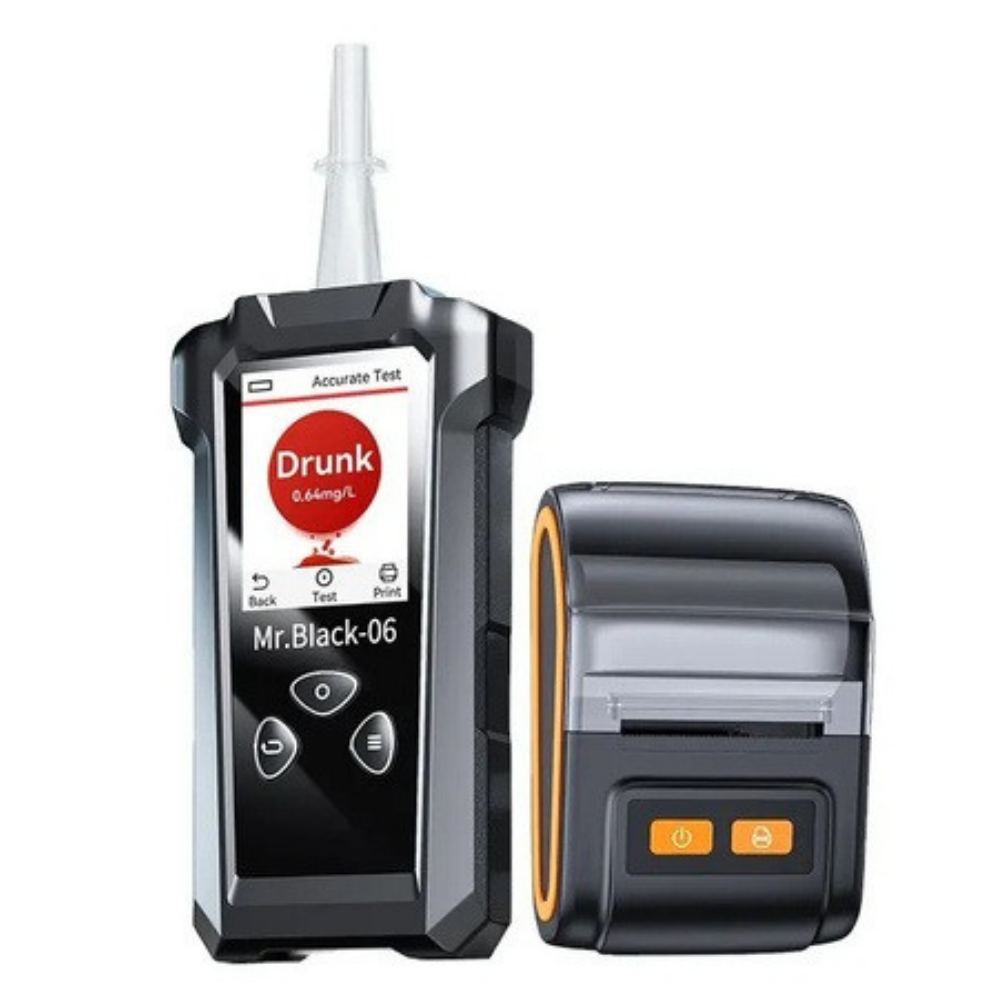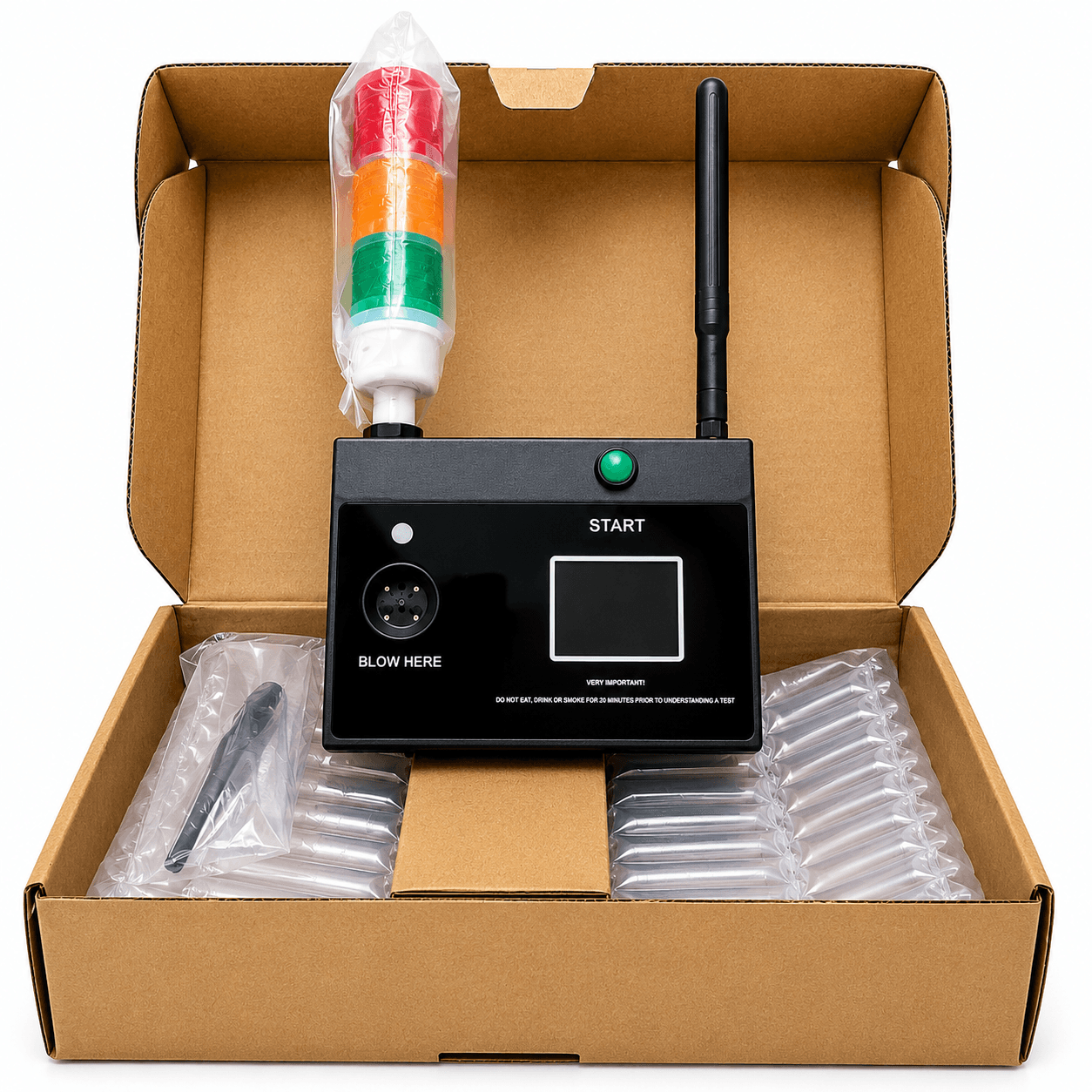

An alcohol testing machine is a device that measures the concentration of alcohol in a person's breath and converts that reading into an estimated blood alcohol concentration (BAC). You blow into a mouthpiece or sensor port, the instrument analyses the deep-lung air you exhale, and a result appears on the display in seconds. The same category of device is sold as an alcohol tester, breath analyzer alcohol meter or simply a breathalyser.
These instruments are used far beyond roadside enforcement. Factories, mines, logistics fleets, construction sites, hospitals, schools, hotels and event venues all use an alcohol breath analyser as part of routine safety screening. This guide explains the technology, the different machine types, accuracy factors and the practical questions to ask before you buy.
How an Alcohol Testing Machine Works
Alcohol consumed as a drink is absorbed into the bloodstream through the stomach and small intestine. When blood passes through the lungs, a small and predictable fraction of that alcohol evaporates into the air inside the alveoli. Exhale, and that alcohol comes out with your breath.
An alcohol breathing analyzer measures this breath alcohol content (BrAC) and applies a conversion ratio to display an equivalent BAC figure. That is why a breath device can act as an indirect blood alcohol tester without drawing a single drop of blood.
The key point: only deep-lung air gives a valid reading. Good machines require a sustained blow of several seconds and only sample the final portion of the breath, which is why they beep or hold a tone while you exhale.
The three sensor technologies
Sensor type How it detects alcohol Typical use
Semiconductor (MOS) Tin-dioxide surface changes resistance when alcohol vapour contacts it Personal and entry-level screening devices
Electrochemical fuel cell Alcohol is oxidised at a platinum electrode, producing a current proportional to concentration Workplace testing, enforcement, professional use
Infrared spectrometry Measures absorption of infrared light at alcohol-specific wavelengths Bench-top evidential instruments
Semiconductor sensors are inexpensive and respond quickly, but they can react to other substances in breath such as acetone, cigarette smoke residue or solvent fumes. Fuel cell sensors are alcohol-specific, drift less over time and hold calibration longer, which is why almost every professional alcohol analyser used in compliance settings is fuel cell based.
Types of Alcohol Testing Machines
Personal pocket testers
Compact, battery-powered devices with a small LCD screen. They are meant for self-checks and general awareness, not for legal or disciplinary decisions. Most use semiconductor sensors and a simple one-button operation.
Professional handheld breath analysers
These are the workhorses of workplace safety. A professional alcohol breath tester uses a fuel cell sensor, accepts replaceable mouthpieces, stores test records and often supports a wireless or attached printer. Many models allow user IDs, so a security supervisor can log who was tested and when.
Passive and non-contact screeners
Some units detect alcohol vapour in the air near a person's face without a mouthpiece. They are fast for high-volume gate screening, but they indicate presence rather than a precise number. A positive passive screen is normally followed by a confirmatory test on a calibrated machine.
Wall-mounted and booth-style analysers
Installed at factory gates, mine entrances or venue doors, these carry out unattended mass screening. Workers blow as they pass through, and the unit signals pass or fail. They suit sites where hundreds of people enter within a short shift-change window.
Evidential and enforcement instruments
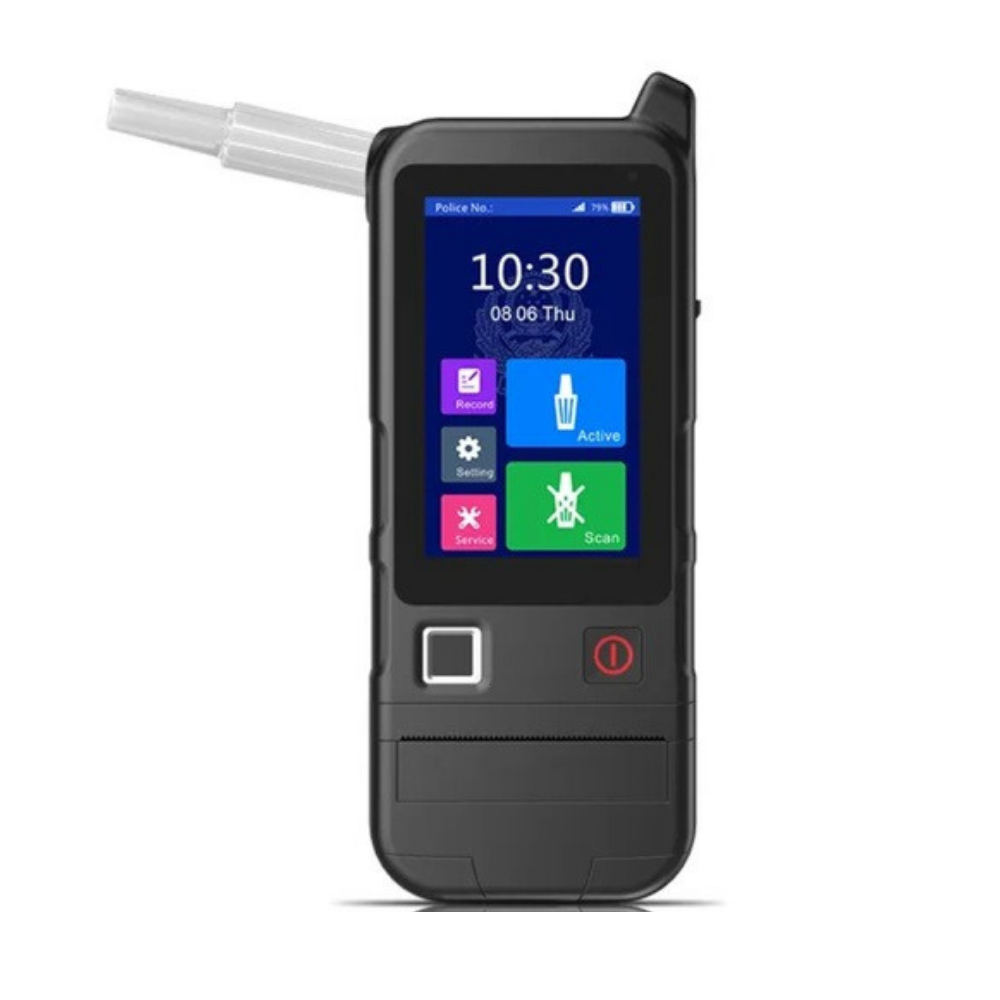
A police alcohol test machine has to meet stricter requirements: proven accuracy, tamper-resistant record keeping, printed results and documented calibration history. Enforcement agencies typically use fuel cell or infrared instruments that can be certified and periodically verified.
Reading the Result Correctly
Most machines in India display results in one or more of these units:
- % BAC — grams of alcohol per 100 ml of blood, for example 0.03%
- mg/100 ml — the same value expressed as 30 mg/100 ml
- mg/L — milligrams of alcohol per litre of breath
- g/L — grams per litre of blood
Check which unit your organisation's policy uses and set the device to match. Confusing mg/L of breath with mg/100 ml of blood is the single most common misreading we see.
Devices also differ in how they present results. Screening units may show only a colour-coded pass, warning or fail band. Professional units show a numeric value plus the band, which matters when a policy sets a specific threshold.
Accuracy: What Actually Affects the Reading
No breath device is a laboratory blood test. What separates a reliable alcohol testing machine from an unreliable one is how consistently it lands near the true value.
Residual mouth alcohol. Alcohol left in the mouth from a recent drink, mouthwash, cough syrup or a burp can produce a falsely high reading. Wait at least 15 to 20 minutes after the last drink before testing.
Blow quality. A short, weak or interrupted blow samples upper-airway air rather than deep-lung air and under-reads. Professional units reject an inadequate sample instead of showing a low number.
Temperature and humidity. Extreme heat, cold or condensation can shift sensor response. Let a device acclimatise before use if it has been in a hot vehicle or a cold store.
Sensor ageing and calibration drift. Every sensor drifts. Semiconductor sensors drift faster; fuel cells drift slower but still drift. Calibration is not optional maintenance, it is what keeps the number meaningful.
Interfering substances. Paint fumes, solvents, sanitiser vapour on the hands and some medical conditions can affect semiconductor readings more than fuel cell readings.
Calibration and Maintenance
Most manufacturers recommend recalibration every six to twelve months, or after a set number of tests, whichever comes first. High-usage sites at a gate testing hundreds of people daily will need it sooner than an office that tests occasionally.
Good practice for any alcohol analyser:
- Keep a calibration log with dates and certificates
- Use one fresh mouthpiece per person for hygiene and accuracy
- Store the unit in a clean, dry case away from fuel, solvents and perfume
- Replace batteries before they get weak, since low voltage can affect the sensor
- Run a periodic check against a known reference if your policy requires it
Choosing the Right Machine for Your Use Case
Use case Recommended sensor Features that matter
Personal awareness Semiconductor Compact size, fast response, easy display
Small office or hotel Semiconductor or fuel cell Replaceable mouthpieces, simple pass/fail bands
Factory, mine, fleet Fuel cell Data logging, printer support, high test count per day
Gate mass screening Passive or wall-mounted Speed, hands-free operation, throughput
Enforcement Fuel cell or infrared Printed record, certification, tamper resistance
Ask these questions of any supplier before you commit:
- Which sensor technology is inside, and what is the stated accuracy tolerance?
- What is the recommended calibration interval, and who performs it in India?
- Are mouthpieces standard and readily available, or proprietary and hard to source?
- How many tests can it run per hour and per battery charge?
- Does it store results, and can they be exported or printed?
- What warranty and service support comes with it?
What about price?
The alcohol breath analyzer price band tracks sensor type and features closely. Semiconductor pocket testers sit at the low end, fuel cell professional handhelds in the middle, and printer-equipped or wall-mounted systems at the top. Consumables and periodic calibration are ongoing costs worth factoring into the total cost of ownership rather than looking only at the sticker price.
If you are comparing models, our team can help you match sensor type to your testing volume. See the current range of breath analysers or get in touch for a recommendation.
Using an Alcohol Testing Machine at Work
A device on its own is not a programme. Organisations that get value from breath testing usually put four things in place:
- A written policy stating thresholds, who gets tested and what happens after a positive result
- Trained operators who know the 15-minute wait rule and correct blow technique
- A confirmation step, since a screening result should be re-tested before any action
- Records, including calibration certificates, that stand up to scrutiny later
Handled this way, a breath analyzer alcohol test becomes a defensible safety control rather than a source of disputes.
Key Takeaways
An alcohol testing machine estimates blood alcohol from breath, and its reliability depends on sensor type, blow quality and calibration discipline. Fuel cell devices are the right choice wherever a result carries consequences. Semiconductor testers are fine for awareness and low-stakes screening. Match the machine to how often you will test, how many people you will test and what you plan to do with the number.
 45,000