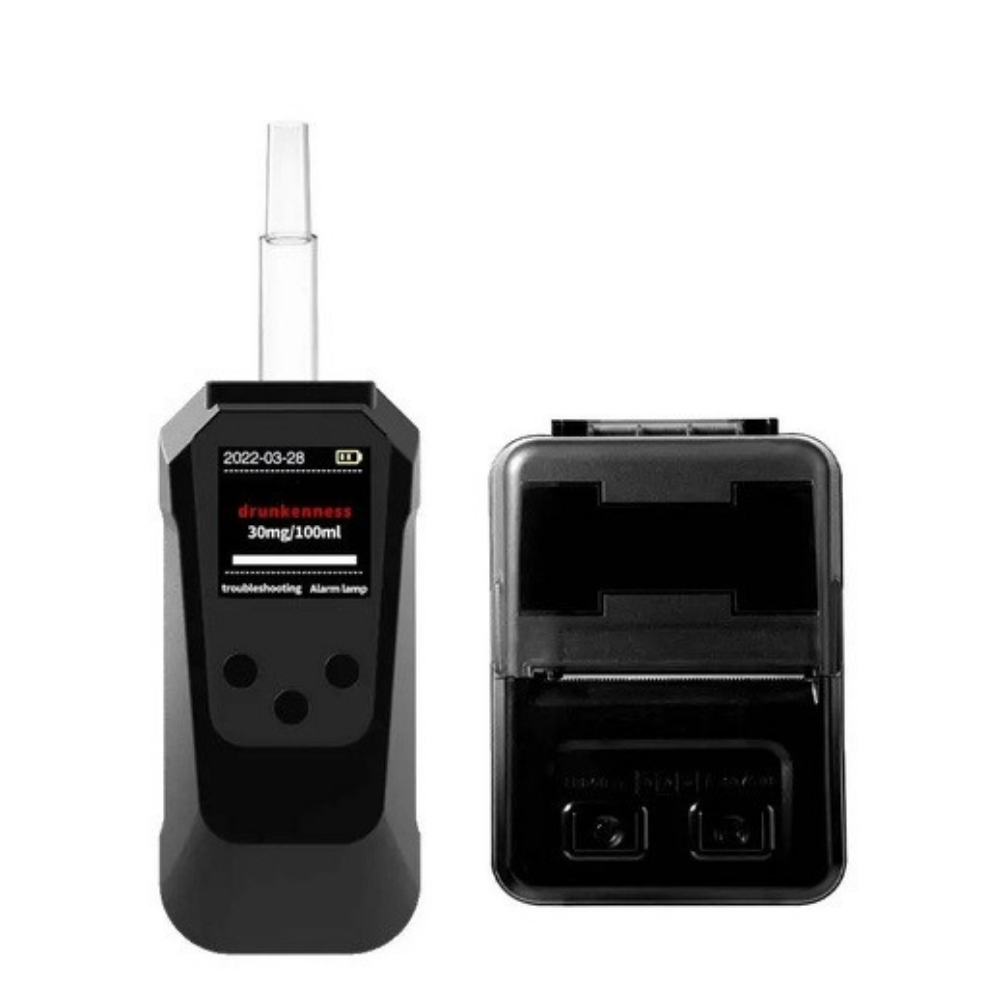
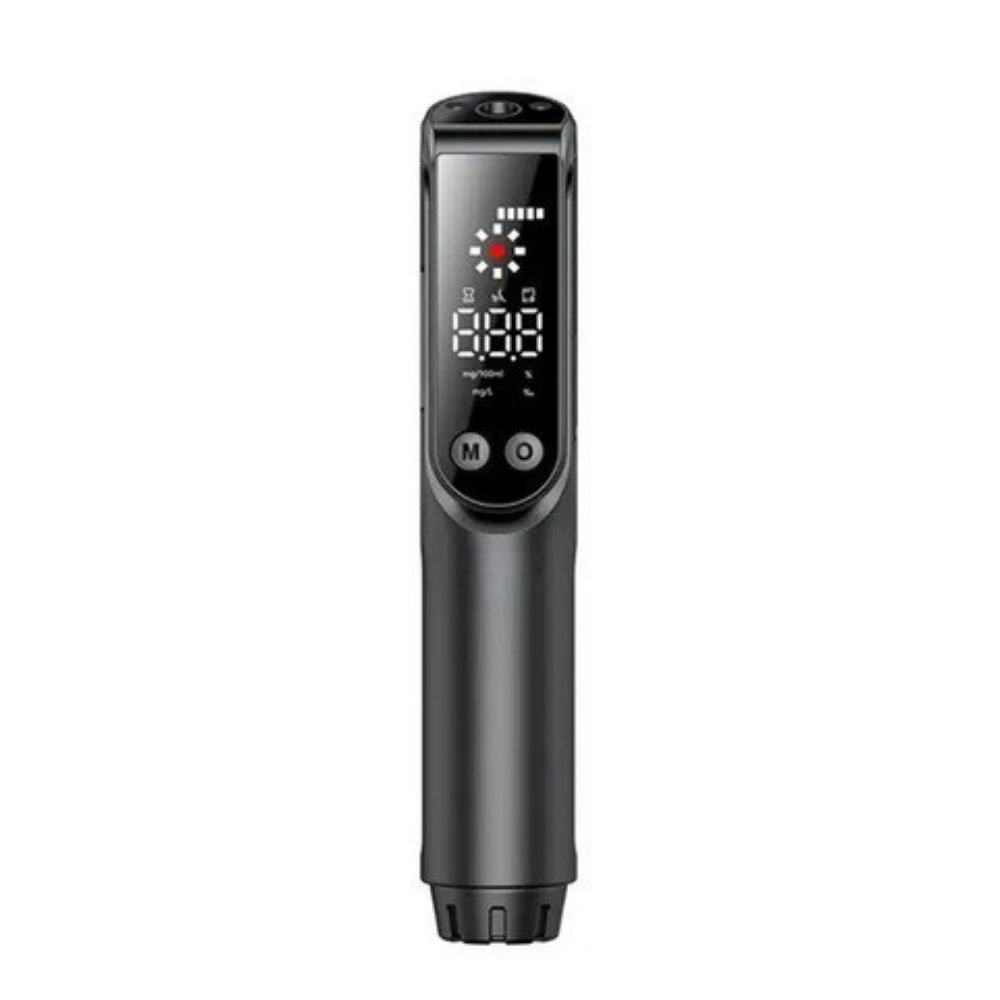
Traffic police in India check alcohol with a breath analyser (breathalyzer). You blow into the device, and it measures the alcohol in your breath. From that, it works out your blood alcohol level.
Step by step at a checkpoint
- The officer stops your vehicle, usually at a night checkpoint.
- A fresh, sealed mouthpiece is fitted on the device for you.
- You take a deep breath and blow steadily for a few seconds.
- The device shows the reading on screen, usually in mg/100 ml.
- Many police devices print a slip with the date, time and reading. This slip can be used as evidence.
- If the reading is above 30 mg/100 ml, the officer books the offence under Section 185 of the Motor Vehicles Act.
What device do police use?
Most police breath analysers use a fuel cell sensor. It is far more specific to alcohol than cheaper semiconductor sensors, which can also react to other gases. Many models have a built-in printer for the evidence slip. Learn the difference in fuel cell vs semiconductor breathalyzers.
Some newer devices are non-contact: the driver blows towards the device without touching it. Police use these for quick screening of many drivers.
What if you fail the test?
- Your vehicle may be held and a challan is issued
- First offence: fine up to ₹10,000 and/or jail up to 6 months
- Repeat offence within 3 years: fine up to ₹15,000 and/or jail up to 2 years
- Your licence can be suspended
- If you dispute the reading, a blood test can be done at a hospital
See the full police breath analyser checkpoint guide.
Equipment for police and enforcement teams
AlcoBreath supplies breath analysers with printers, non-contact screening devices and calibration service from our own lab. See police alcohol testers or request a quote.
Frequently asked questions
Can police check alcohol without a breath analyser?
The legal evidence comes from a breath analyser reading or a blood test.
Can I refuse a breath test?
Refusing can lead to further action under the Motor Vehicles Act. It is better to take the test.
Can mouthwash give a false reading?
Yes, right after use. Officers usually wait 15 minutes and test again.
 9,500