Pune does not have one alcohol testing problem. It has several, and they look nothing like each other. A plant manager in Chakan needs to screen a full shift at the gate before the line starts. A logistics firm on the Pune–Bengaluru highway needs to clear drivers before dispatch at odd hours. A college in Pimpri-Chinchwad runs buses at seven in the morning. A hotel in Koregaon Park wants to stop a guest from driving away after a few drinks. A family in Baner wants a small device for the car. All of them search for an alcohol tester in Pune, and each of them needs a different device.
This guide works through those situations one at a time, so you can skip to the one that sounds like yours.
Why this matters in and around Pune
Pune's industry is spread out. The automotive and engineering belts at Chakan, Bhosari, Pimpri-Chinchwad, Talegaon and Ranjangaon run multiple shifts, with heavy machinery, forklifts, presses and paint shops. The IT parks at Hinjewadi, Kharadi and Magarpatta put a large number of cabs and company buses on the roads every morning and evening. Warehouses and transport yards have grown along the Mumbai–Pune Expressway and the highway towards Satara and Bengaluru.
What ties these together is movement. People commute long distances, many of them on two-wheelers, and goods travel through the city day and night. Every one of those journeys and every one of those shifts has a person at the controls. Alcohol testing is simply a way of checking, before the shift or trip begins, that the person is fit to do it.
The legal line, and why most employers set a stricter one
Under section 185 of the Motor Vehicles Act, 1988, driving with more than 30 mg of alcohol per 100 ml of blood is an offence anywhere in India, and the police can use a breath analyser to check. That is the law on the road, and it applies in Pune exactly as it does everywhere else.
Your workplace policy is a separate matter. A factory, fleet or school sets its own rule as a condition of work or site entry. Most employers who run machines or vehicles choose zero, not 30 mg, because a person just under the legal driving limit is still not someone you want operating a press or driving forty students. Write that threshold into your policy in plain words, so nobody argues about it after the first positive reading.
Matching the tester to the Pune setting
Factory gates in the MIDC belts
A plant with several hundred people arriving within thirty minutes cannot afford a slow test. What matters here is throughput, durability and records.
- Choose a fuel cell sensor. It responds to ethanol specifically and stays accurate across many tests in a row, which a busy gate needs.
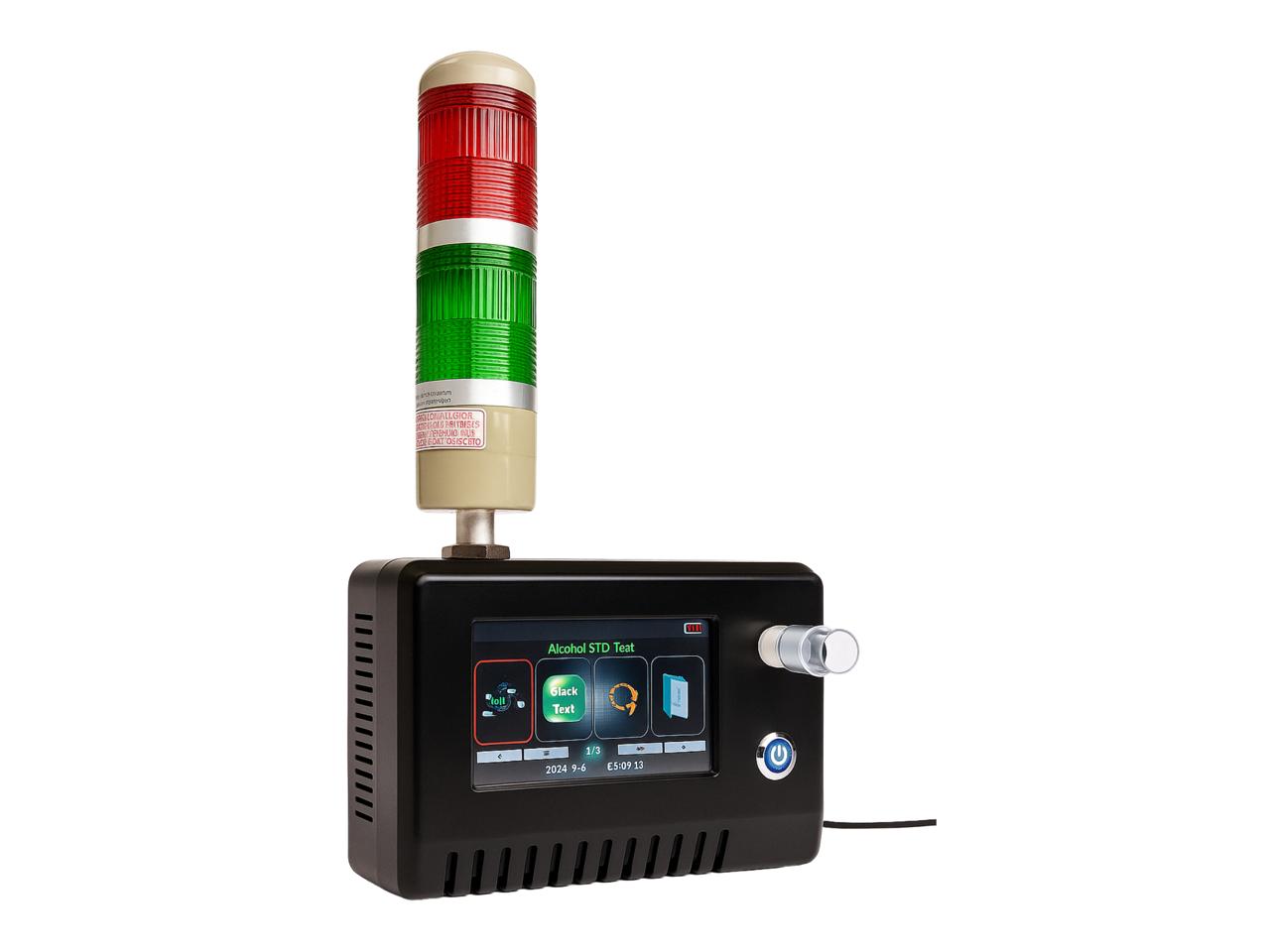
- Consider a wall-mounted or desktop screening unit at the turnstile, so security staff are not passing a handheld device around all morning.
- If your auditors or your customers ask for evidence, pick a model with a printer or data storage, so each test has a time and a result attached.
- Keep a second, handheld fuel cell unit for retests and for the days the main unit is away for service.
Transport, logistics and cab fleets
Pune's fleets range from long-haul trucks leaving the Chakan belt for the ports, to cab operators serving the IT parks, to buses and tempo travellers. The common thread is that drivers report at different times and sometimes at different depots.
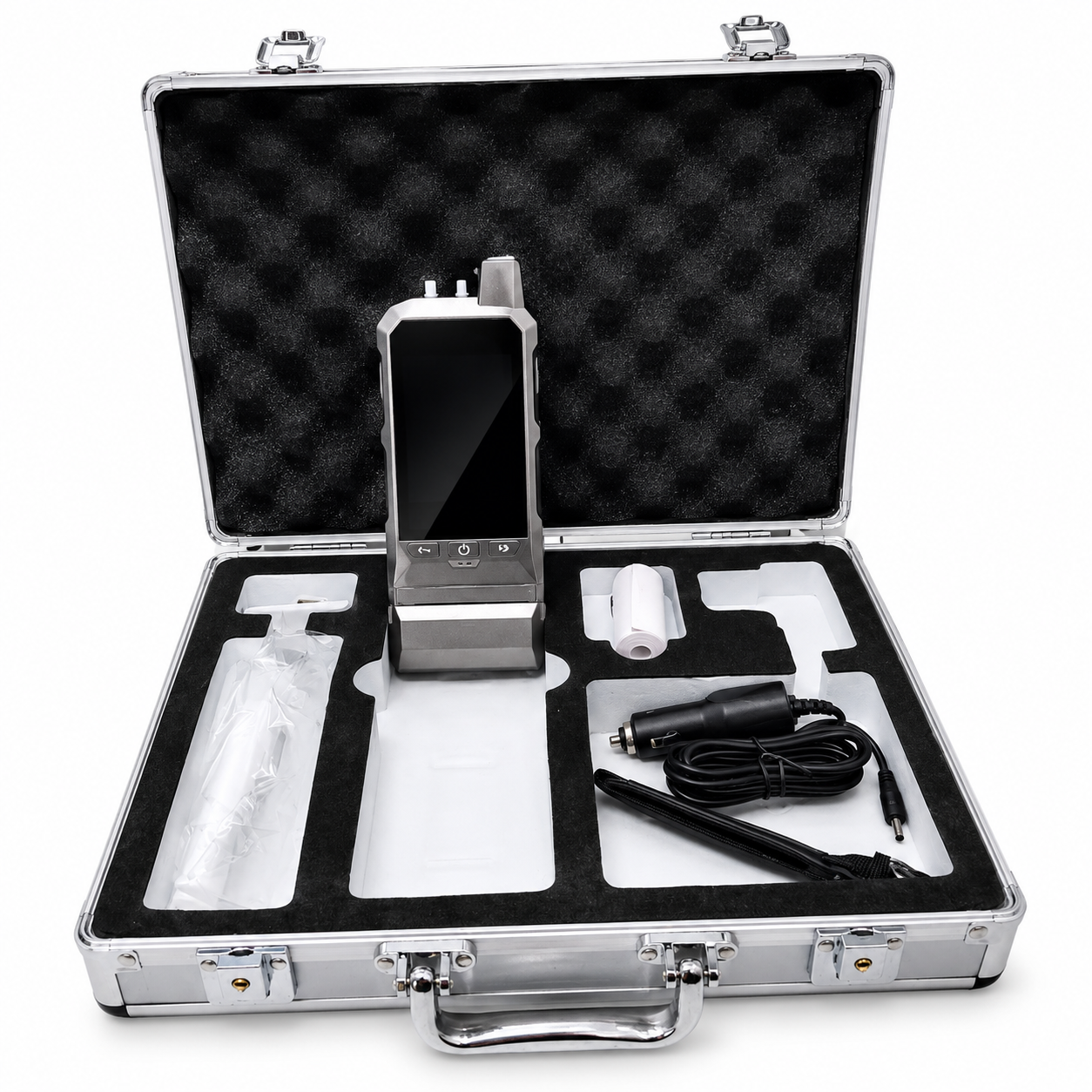
- A portable fuel cell analyser with a printer suits dispatch points. The printed slip can be stapled to the trip sheet.
- For drivers who start from home or a remote yard, give the supervisor a handheld unit and a simple log, rather than expecting every driver to pass through one office.
- Decide in advance what happens if a driver fails: stand down, retest after 15 to 20 minutes to rule out mouth alcohol from mouthwash or food, then a clear next step.
School and college transport
Pune is known as an education city, and that means a lot of buses and vans on the road at the start and end of every school day. A school or college does not usually need a high-volume machine. It needs a reliable test of a small number of drivers, done every morning and written down.
- A good handheld fuel cell device is usually enough.
- Test before the first pickup, not after the bus is already on its route.
- Keep the log where the principal or transport in-charge can see it. A dated record is a far better answer to a worried parent than a verbal promise.
Hospitals and clinics
Emergency departments use breath testing as a quick first check before deciding whether a blood test is needed. Hospitals also screen their own drivers and ambulance staff. A fuel cell analyser with disposable mouthpieces keeps things hygienic, and a printer helps when the result has to go into a patient or staff file.
Hotels, bars and restaurants
Venues in areas like Koregaon Park, Kalyani Nagar and Baner see many guests who arrive by car. Some keep a tester at the exit or the valet desk so guests can check themselves before driving. A wall-mounted self-test unit or a simple non-contact tester works well here. The aim is to help a guest make a sensible choice, not to produce a legal measurement, so make sure staff present the reading as guidance only and offer to call a cab.
Individuals and families
Many people who search for an alcohol tester in Pune are not buying for a company. They want to know whether they are fit to drive home after a dinner or a wedding. A compact personal tester is fine for this. A semiconductor model is cheaper; a fuel cell model costs more but gives more dependable readings. Either way, the safest rule does not change: if you have been drinking, do not drive, whatever the number says.
Police and enforcement
Enforcement agencies need evidential-grade fuel cell analysers with printers and data memory, because the result may be used in a legal process. These purchases usually follow a formal tender with defined specifications, and that specification sheet should drive the choice of model.
Fuel cell or semiconductor: the short version
If a reading will lead to a decision, such as stopping a driver, refusing site entry or starting a disciplinary process, buy a fuel cell device. It is more selective to alcohol and holds its calibration longer. Semiconductor devices are fine for personal awareness and low-stakes checks, but they can react to other substances on the breath and drift faster. For a fuller comparison, read our guide on fuel cell vs semiconductor breathalyzers.
When you are ready to compare models, you can browse our alcohol testing machines by sensor type, by format (handheld, wall-mounted or desktop) and by whether they include a printer.
Calibration and service: plan for it on day one
Every alcohol sensor drifts with time and use. A device that has not been calibrated in a long time will still show a number, but nobody can say whether that number is right. This matters most on the day a reading is challenged.
When you buy, settle these points:
- How often this model should be calibrated, given how many tests you will run.
- Who will calibrate it, and how long it will be away.
- Whether you get a dated calibration record with the device serial number on it.
- What you will use for testing while it is away.
A busy factory gate in Chakan will reach its calibration point much sooner than a school testing six drivers a day, so the schedule should follow your usage, not just the calendar. Our breath analyzer calibration guide explains what happens during calibration and how to keep records that hold up.
Do not forget consumables. A site testing hundreds of people a day goes through mouthpieces quickly. Agree on a reorder quantity and lead time at the start, so screening never stops because the box ran empty.
Buying in Pune: what to expect from us
AlcoBreath's head office is in Pune, so buyers in the city and the surrounding industrial areas can talk to us directly about choosing a device, calibration and mouthpiece supply. Our office is at 805, Gera Imperium Rise, Wipro Circle, Hinjewadi Phase 2, Pimpri-Chinchwad, Pune, Maharashtra 411057. You can call or WhatsApp us on +91 99108 52399, or email alcobreath.in@gmail.com.
For companies with plants or depots outside Pune, we supply across India, so the same model and the same testing procedure can be used at every location.
A simple checklist before you place the order
- Who will be tested, how many people per day, and at what time?
- Will the result lead to a decision? If yes, choose fuel cell.
- Do you need a printed slip or stored records for audits or customers?
- Handheld, wall-mounted or desktop: which suits the place where testing happens?
- What is your written threshold, and what happens after a positive reading?
- Who is responsible for calibration dates and mouthpiece stock?
- Who will train the security guard, supervisor or transport in-charge who runs the test?
Answer those seven questions and the right tester usually becomes obvious. In Pune, the plant gate, the transport depot, the school bus and the family car each have their own answer. Pick the one that fits the job, keep it calibrated, and use it every day, not just on the day someone asks.
 15,000