
The fitter says the machine is wrong. He blew 0.03, he has not touched a drink since Sunday, and he wants to know why a plastic handheld gets to decide whether he works today. Two colleagues are listening. HR is on the phone asking what your record shows.
And you cannot say for certain that he is wrong. Nobody timed the fifteen minutes before the blow. The mouthpiece came from an open box on the table. The calibration sticker says a date you would have to go and look up. The device may well be right, but you have no way of demonstrating it, and that is the same thing as being wrong.
What happens in that moment is decided long before it, by how the breathalyser test was administered. Skip the deprivation period, accept a short puff, use a unit past its calibration interval, and you have a number you cannot defend and a worker you cannot honestly stand down. The device did not fail. The method did.
This article is about method. Not which analyser to buy, but how the person administering the test gets a result that holds up in a disciplinary hearing, an insurance query, or a conversation with a union representative.
Who Carries the Consequence of a Badly Run Test
Two people, and neither of them is the manufacturer.
The first is the employee. A false positive recorded against a driver's name follows him. If your process cannot show that the reading was taken correctly and confirmed, you have damaged someone on the strength of a number that means nothing.
The second is you and your employer. A false negative sends an impaired operator onto a highway or into a forklift aisle. When the incident report is written, the question will not be whether you owned a breath analyser. It will be whether you used it properly on that occasion, and whether you can prove it.
That is why the operator's technique matters more than the price of the device.
What a Breathalyser Test Actually Measures
A breath analyser does not measure drunkenness, fitness, or last night's decisions. It measures the concentration of ethanol in the air coming out of deep lung tissue, and converts that into an estimate of blood alcohol concentration, reported in India as mg per 100 ml of blood.
The conversion works because alcohol in the bloodstream exchanges into the air in the alveoli at a fairly stable ratio. That is also its limit: a breath reading is an estimate of blood alcohol, not a direct measurement of it.
Two consequences follow for anyone running a screening programme. First, the sample must come from the end of the exhale, or the estimate is meaningless. Second, anything alcoholic sitting in the mouth or throat gets counted as though it came from the lungs. Almost every disputed result traces back to one of those two facts.
Before the Queue Forms: The Pre-Test Check
Run this before the first person arrives, not while thirty men wait.
Check What you are looking for
Calibration status Within the interval the manufacturer specifies. Out of date means the reading is not defensible.
Battery or charge Enough for the full shift intake, plus retests.
Mouthpieces One sealed mouthpiece per person, plus spares for confirmatory tests.
Sensor readiness Device powered on and allowed to complete its self-check and warm-up.
Ambient conditions Not directly beside a diesel exhaust, paint store, solvent drum or sanitiser dispenser.
Record sheet or app Ready to capture date, time, device serial, tester name, result, subject acknowledgement.
One habit worth building: test the device on yourself, or on a known-sober supervisor, as the first reading of the session. A zero on a known-sober subject confirms the unit is awake and the mouthpiece seating is correct.
Also check your own hands. Alcohol-based hand rub is everywhere in Indian workplaces now, and vapour from freshly sanitised hands near the intake is one of the most common causes of a puzzling low positive on a screening pass.
The Deprivation Window and Mouth Alcohol
This is the single step most often skipped, and the one that destroys the most results.
Alcohol lingering in the mouth from cough syrup, mouth freshener, paan masala preparations, a recent gargle, or even a burp will read far higher than the alcohol actually in the person's blood. A screening device cannot tell the difference between alcohol in the lungs and alcohol on the tongue.
The standard practice is a waiting period of around 15 to 20 minutes before the test, during which the person does not eat, drink, smoke, chew or vomit. In a queue that sounds impossible. It is not, if you build it into the flow: the person signs in, waits in a marked area while the previous batch is tested, and is called forward when the window has passed.
If a positive appears and you know the window was not observed, treat it as a screening flag only, then wait the full period and retest with a fresh mouthpiece. That second reading is the one you act on.
Running the Breathalyser Test: Positioning and Sample Volume
Positioning. Stand slightly to the side of the person, not directly in front of them. You need to see the mouthpiece and the display at the same time, and you do not want their exhale in your face. Hold the device yourself. When the subject holds it, you lose sight of whether the seal is complete and whether they are blowing or puffing.
The mouthpiece must be seated fully on the device and the person's lips closed around it. A gap at the lips is the reason for most "insufficient sample" errors, and it also lets a person deliberately under-deliver.
Keep the device roughly upright and steady. Do not let it dangle on a lanyard or rest against clothing during the blow.
Sample volume. The reading you want comes from deep lung air, the end of the exhale, not the first puff from the mouth and throat. A short, sharp blow gives an artificially low result and is the easiest way for someone to game a test.
Instruct clearly, in one line: take a normal breath in, seal your lips, and blow steadily until I tell you to stop. Then let the device's tone or indicator decide when the sample is complete. Do not accept a blow that cuts off early, and do not accept several small breaths stacked together.
If someone repeatedly delivers an insufficient sample, that is a behaviour to record, not a technical failure to shrug at. Log it as a refusal or an incomplete test according to your policy.
Passive or non-contact screening. Some devices allow a mouthpiece-free pass for high-volume screening. It is a filter, not a result. Wind, distance and the person turning their head all affect it. Anything that flags on passive mode must be confirmed with a proper mouthpiece test.
What Throws Off a Breathalyser Test
When a reading is challenged, these are the factors the challenge will be built on. Know them before the argument starts.
Factor Effect on the reading How you control it
Mouth alcohol from freshener, syrup, gargle, paan preparation Sharply high, then falls away 15 to 20 minute deprivation window, then retest
Recent burp, reflux or vomiting High, unpredictable Wait the full window again before the confirmatory test
Short or interrupted blow Falsely low Device-controlled minimum volume and flow; refuse partial samples
Hand sanitiser, solvent, paint or fuel vapour near the intake Low positive on a semiconductor sensor Fuel-cell sensor; move the test point away from vapour sources
Smoking immediately before the test Sensor contamination and skewed readings Include smoking in the deprivation rule
Device past its calibration interval Drift in either direction Calibration schedule with dated certificates
Extreme heat, cold or dust at the test point Sensor error or refusal to sample Test in shade or indoors; follow the operating range in the manual
What does not throw off a properly run test: coffee, strong food, chewing gum after the waiting period, or breathing hard. Those are workplace folklore. Neither does time alone, which is the next point.
Accuracy, and the Time Question Everyone Asks
A fuel-cell handheld, calibrated on schedule and used correctly, is accurate enough to decide whether someone stands down from a safety-sensitive task. It is a screening instrument, not a laboratory. That is why the confirmatory retest and the written policy exist: the decision rests on procedure plus reading, never on a single number seen once.
What degrades accuracy is almost never the sensor. It is an expired calibration, a partial sample, mouth alcohol, or a contaminated test point.
On how long alcohol stays detectable, resist giving anyone a figure. The body eliminates alcohol at a broadly steady rate, but the starting point depends on how much was consumed, over what period, on what food, and on the individual's body mass and health. A few drinks late at night can still register the following morning for one person and not for another, which is precisely why guessing is not a safety control and testing is.
So do not let a worker or a supervisor argue from arithmetic. "I stopped at midnight, so I must be clear" is not evidence. The reading is the evidence, and the procedure is what makes the reading trustworthy.
Common Operator Errors
- Testing immediately after the person has eaten, smoked or used mouth freshener.
- Reusing a mouthpiece between two people, which is both a hygiene failure and a contamination risk.
- Blocking the sensor intake with a thumb or a glove.
- Testing in the direct path of exhaust, solvent vapour or a sanitiser station.
- Accepting a two-second blow because the queue is long.
- Reading the display before the device has settled on its final value.
- Recording only the positives and leaving the negatives unlogged, which makes the whole record set look selective.
- Announcing the result loudly in front of the shift.
That last one costs more than it looks. A positive handled publicly turns a safety process into a humiliation, and the next person with a problem will find a way around your checkpoint rather than through it.
Handling a Positive Reading
Move the person aside and out of earshot. Say what the device showed and nothing more. Do not diagnose, accuse or speculate about the previous night.
Wait the deprivation period. Retest with a fresh mouthpiece on the same device, ideally with a second supervisor present as a witness. Record both readings, both times and the witness name.
If the confirmatory reading is also positive, apply your written policy: stand down from safety-sensitive duty, arrange transport home rather than letting the person drive, and route the case to HR. The person administering the test enforces the policy; he does not invent the consequence on the spot.
For drivers, remember the reference point on Indian roads is the limit set under the Motor Vehicles Act, 1988, of 30 mg of alcohol per 100 ml of blood. Many employers set their workplace threshold at zero for safety-sensitive roles, which is permitted and usually clearer to enforce. Whichever you choose, it must be written down before the first test, not decided at the checkpoint.
Records That Survive Scrutiny
A reading with no paperwork behind it is an opinion. For every test, capture:
- Date, time and location
- Name and employee number of the person tested
- Device make and serial number
- Date of last calibration
- Result, including both screening and confirmatory readings
- Name of the person administering the test, and of any witness
- Acknowledgement or signature from the person tested
Keep the negatives too. A complete log demonstrates a consistent process applied to everyone. A file of positives only invites the question of who was chosen and why.
When a result is disputed later, this file is the whole of your answer. It is what turns "the machine is wrong" into a question that can be settled.
Training the People Who Hold the Device
Breath alcohol screening is usually delegated to security staff, shift supervisors or safety officers who were handed a device and a short verbal briefing. That is where technique drifts.
Write a one-page standard operating procedure covering the deprivation window, positioning, the blow instruction, the confirmatory retest and the log format. Walk each nominated tester through it with a live demonstration. Refresh it when the roster changes, because the person holding the device in March is rarely the person holding it in September.
The Device the Method Requires
Method only carries you so far. Running a disciplined test on a sensor that drifts is wasted effort.
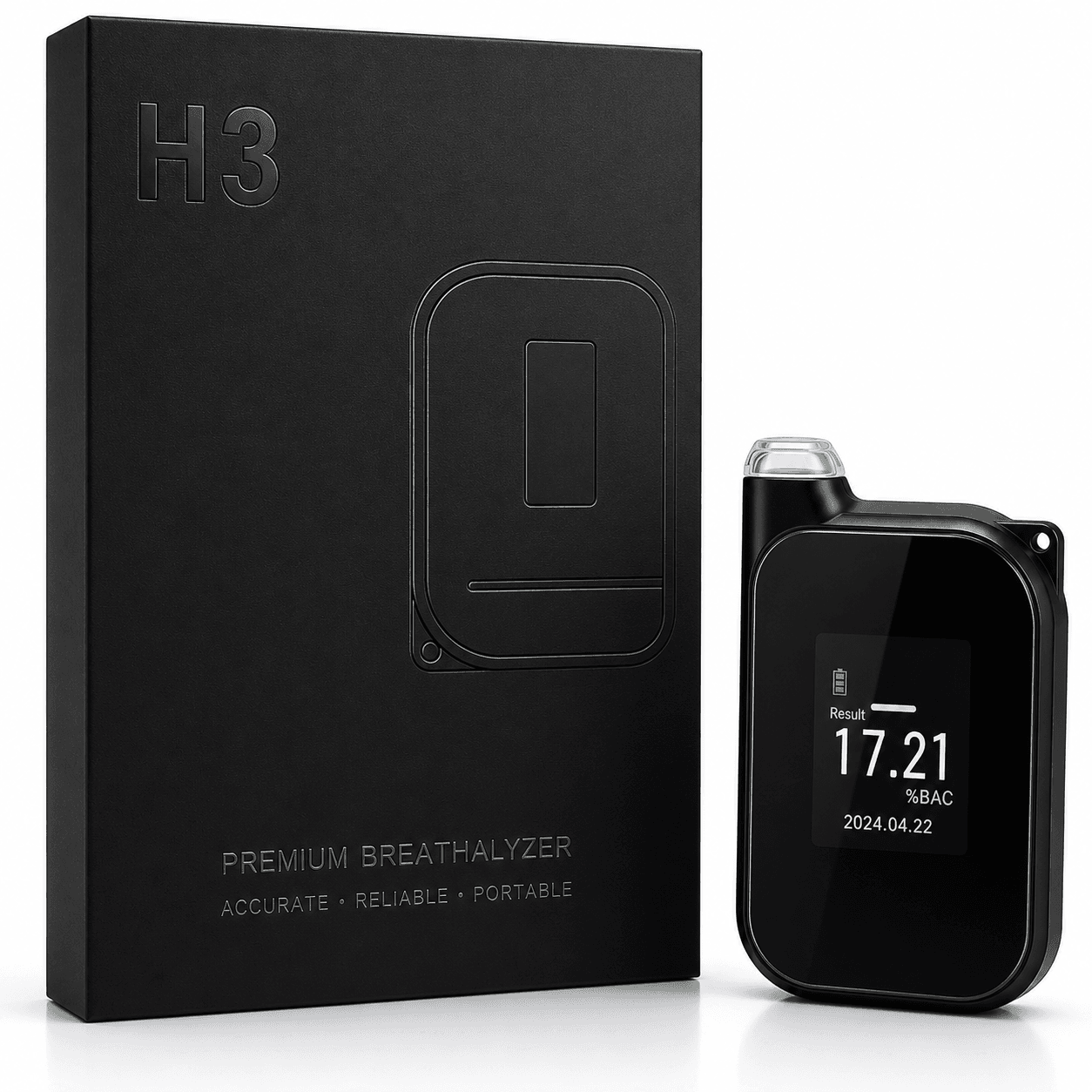
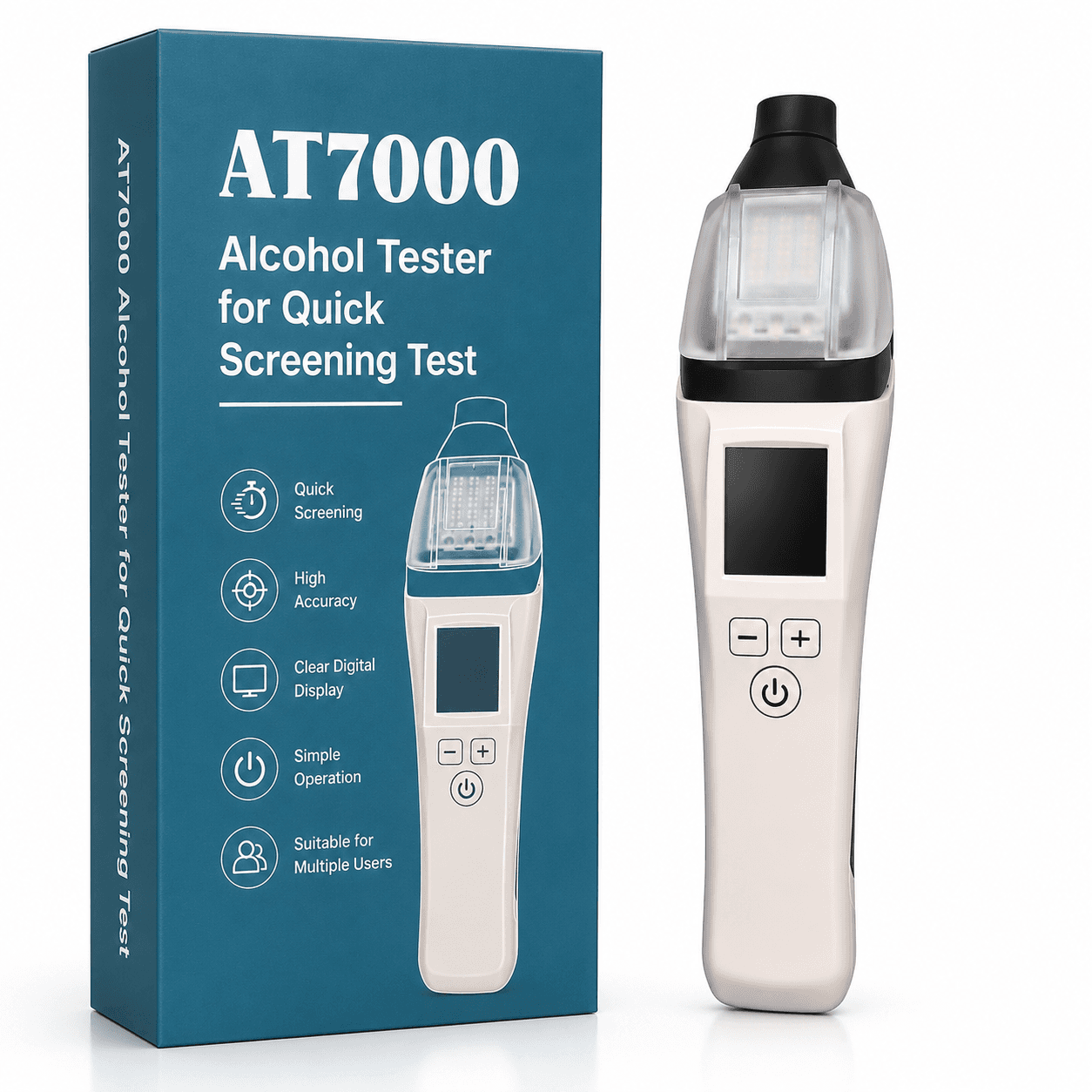
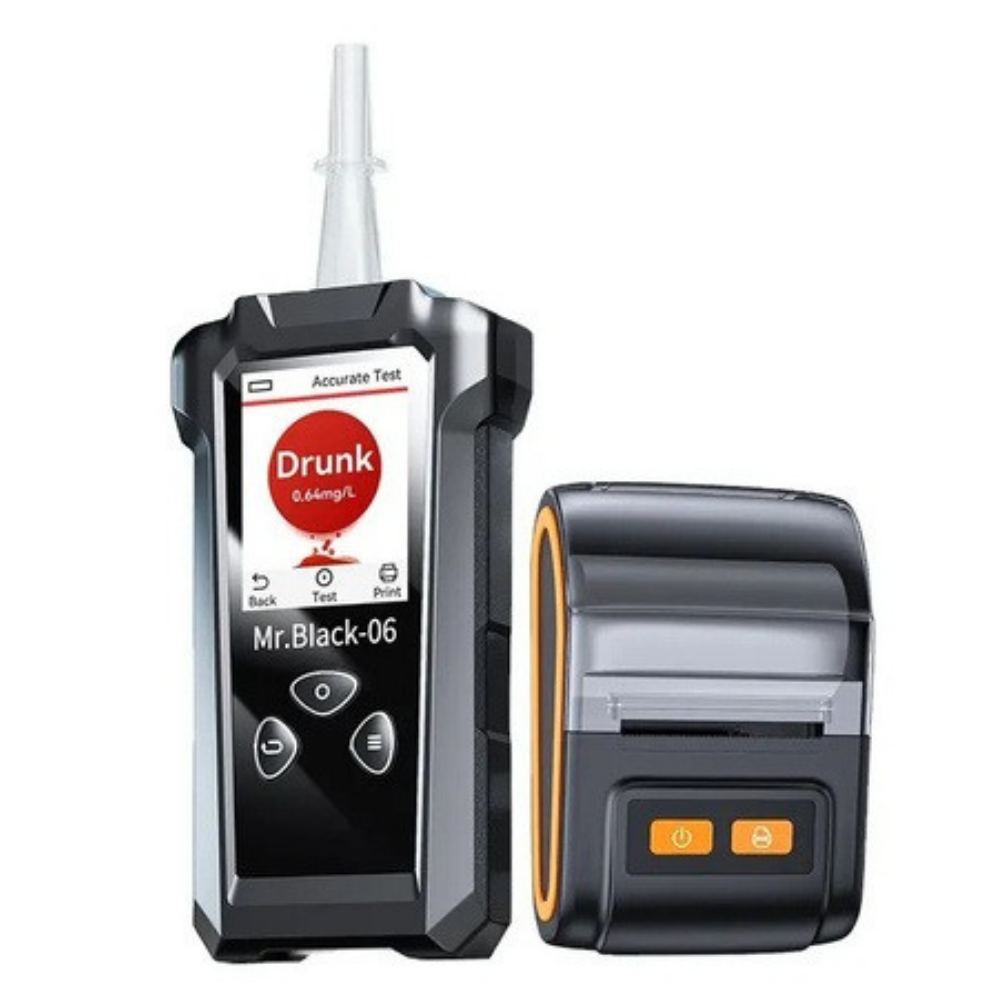
For workplace screening where a result may lead to a stand-down, you want a fuel-cell sensor, which responds to ethanol specifically rather than to the broader range of vapours that can excite a cheaper semiconductor sensor in a workshop or paint shop. You want a device that sets its own minimum sample volume and flow rather than accepting whatever it is given. And you want documented calibration you can produce on demand.
If you are equipping a checkpoint for daily screening, look at AlcoBreath's fuel-cell handheld range with mouthpiece testing and calibration support, and match the throughput of the unit to the size of your intake. The device is the easy part. The method is what makes the result mean something.
 35,000