
The call comes at half past eleven. A driver on a national highway run has been stopped at a police check, tested, and detained. The vehicle is off the road, the consignment is going to miss its delivery window, and by morning the client will want an explanation in writing that the transport office does not yet have.
Driving under the influence of alcohol is not only the driver's problem in that moment. It becomes the operator's problem the instant a paying customer asks who cleared that driver for duty. This article sets out what the offence actually is in India, what the penalties are, how roadside testing works, and what a workable pre-dispatch screening policy looks like for anyone who signs off on vehicles moving.
What driving under the influence of alcohol means in India
Under Section 185 of the Motor Vehicles Act, 1988, a person commits an offence if, while driving or attempting to drive a motor vehicle, they have alcohol exceeding 30 mg per 100 ml of blood, detected in a test by a breath analyser or in any other test including a laboratory test. The same section also covers driving while under the influence of a drug to an extent that renders the person incapable of exercising proper control.
Two points matter for anyone running a fleet. First, the threshold is low. Thirty milligrams per 100 ml is well below the limits used in many other countries, and a driver who feels perfectly fine can cross it.
Second, the offence is not limited to actually driving. Attempting to drive is enough. A driver found in the seat with the engine running is not in a safe position simply because the vehicle has not moved.
For a fuller treatment of the limit and how it is applied, see our detailed piece on drink and drive in India: the law, the limit and who carries the risk.
DUI, DWI and the words Indian operators actually need
Search traffic in India is full of terms borrowed from elsewhere. People look for a DUI lawyer or a DWI lawyer, or type "DUI" expecting an Indian legal category to match it. There is no charge called DUI or DWI in Indian statute, and no such thing as a DWI conviction here.
DUI stands for driving under the influence and DWI for driving while intoxicated. Both are American charge labels. In India the relevant provision is Section 185 of the Motor Vehicles Act, supported by provisions on arrest without warrant and on suspension of driving licences, and by separate criminal law where death or grievous hurt results.
So if a driver is detained, the person you need is a criminal or motor vehicles advocate practising in that jurisdiction, not a "DUI lawyer" in the sense the phrase carries abroad. Ask for someone who regularly appears in the local magistrate's court on Motor Vehicles Act matters.
The drunk driving penalty: what the Act provides
The Motor Vehicles (Amendment) Act, 2019 raised the penalties considerably. The structure is straightforward.
Situation Penalty under Section 185
First offence Imprisonment up to 6 months, or fine up to Rs 10,000, or both
Second or subsequent offence within 3 years Imprisonment up to 2 years, or fine up to Rs 15,000, or both
Alongside the fine, the licensing authority can move to disqualify or suspend the driving licence. For a commercial driver, that consequence usually outweighs the money by a wide margin, because it removes the person's ability to earn and the operator's ability to deploy them.
The drink driving penalty also does not stand alone. Where drunk driving causes injury or death, the matter moves into far more serious criminal territory under the general criminal law on rash and negligent acts, and the sentences there are of a different order altogether.
The insurance and contract consequences nobody reads until later
Standard motor insurance policies in India exclude liability where the vehicle was being driven by a person under the influence of intoxicating liquor. That exclusion is not a technicality. It can convert a covered claim into an uncovered loss sitting on the operator's balance sheet.
Many logistics contracts and site-entry conditions now carry their own clauses on driver fitness and substance screening. A client audit that finds no screening records at all is a finding you cannot argue your way out of after an incident.
DUI checkpoints and how roadside testing works
DUI checkpoints, or what people also search for as DWI checkpoints, are simply the police nakabandi and traffic enforcement points familiar on Indian highways, city arterial roads and festival routes. Enforcement typically increases at night, on weekends and around major festivals.
At the check, a traffic officer may require a breath test. The device used is a breath analyser, and the reading is taken on the spot. Refusing the test is not a way out; the law provides for the officer to have the person taken for a laboratory examination.
The driving drunk test, and what the number is
A roadside drunk test measures breath alcohol and reports a result related to blood alcohol concentration. Where the reading is contested, or where the person is unable to provide breath, a blood sample analysed in a laboratory becomes the reference. We have covered the difference between the two in alcohol and blood test: what the lab measures and what breath screening already answers.
Drivers frequently dispute readings, and some disputes are legitimate. Mouth alcohol from a recent drink, mouthwash or certain medicines can inflate a result taken too soon, which is why a waiting period before testing matters. Understanding what a figure actually represents is worth the fifteen minutes it takes to read our BAC tester readings guide.
There is also no reliable way to talk your way past a reading with a home remedy. Time is the only thing that lowers blood alcohol, and the rate is slower than most people assume. Our note on how much alcohol is safe explains why "I stopped drinking at midnight" does not mean clear at six.
Who carries the consequence when screening is skipped
If a driver leaves your yard over the limit, the driver faces prosecution. The operator faces the vehicle being held, the load being delayed, the insurer raising the exclusion, the client raising the contract, and in a serious case a set of questions about supervision that a dispatch register alone will not answer.
That is the practical case for screening before dispatch rather than relying on enforcement to catch problems. A police check is a detection system for the state. It is not a control system for your business.
The same logic applies beyond road transport. Site managers moving material handling equipment, mine operators running haul trucks, warehouse supervisors clearing forklift drivers and event venues releasing valet keys are all making the same decision about who is fit to operate a vehicle.
A pre-dispatch screening policy that actually holds up
A policy has to survive a dispute with a driver, a union representative and an auditor. Keep it short and keep it consistent.
- Write the rule down. State that operating any company vehicle with detectable alcohol is prohibited, and that screening is a condition of duty.
- Screen everyone in a defined group, not people who look suspicious. Random or blanket testing at the start of shift is defensible. Selective testing invites allegations of targeting.
- Set a waiting period. Fifteen to twenty minutes after any drink, rinse or tobacco product before a test, to avoid mouth-alcohol errors.
- Define the second test. A confirmatory retest on the same device after a short interval, and a documented escalation route if the driver still disputes it.
- Log every test, pass and fail, with time, device ID and operator name. Records you only keep for failures look selective later.
- Say what happens on a positive. Stand down from driving duty, arrange alternate transport home, then follow the disciplinary process. Never let a positive driver take the vehicle.
- Calibrate on schedule and keep the certificates. An uncalibrated device is a liability, not a control.
Choosing the right device for the job
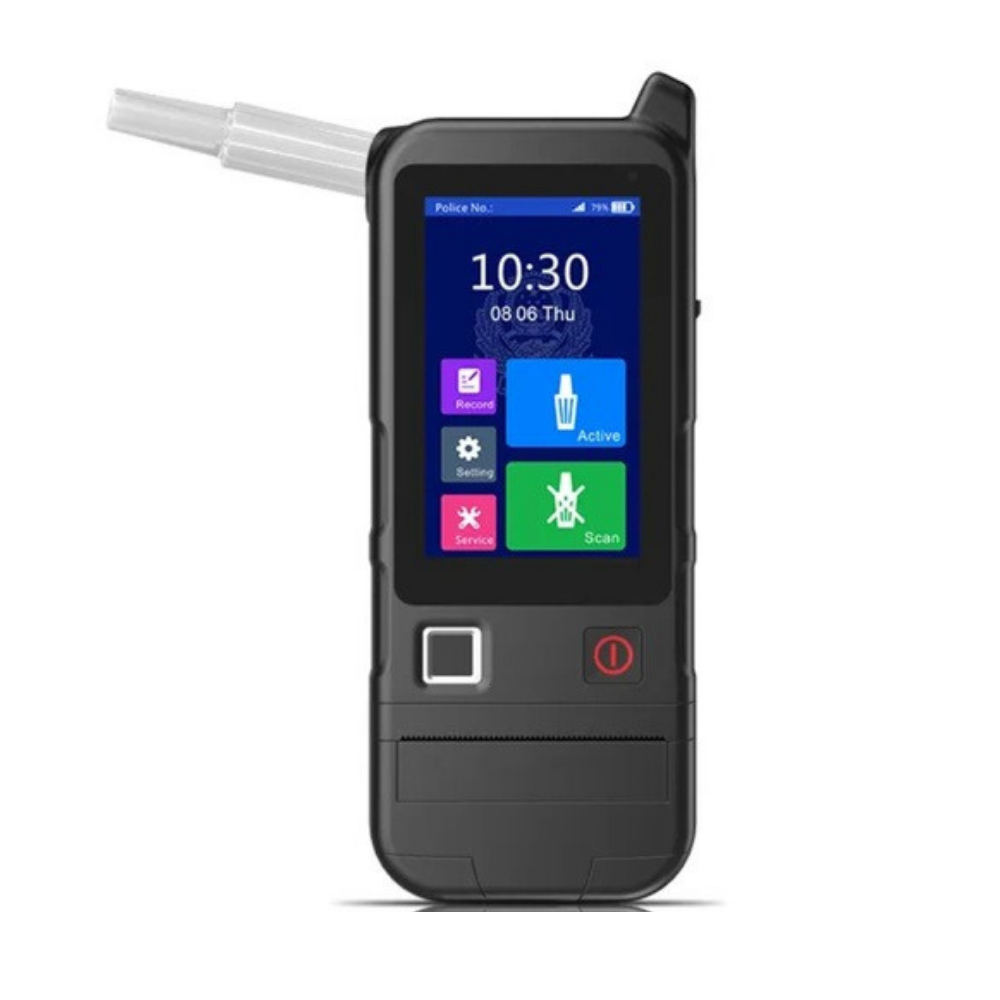
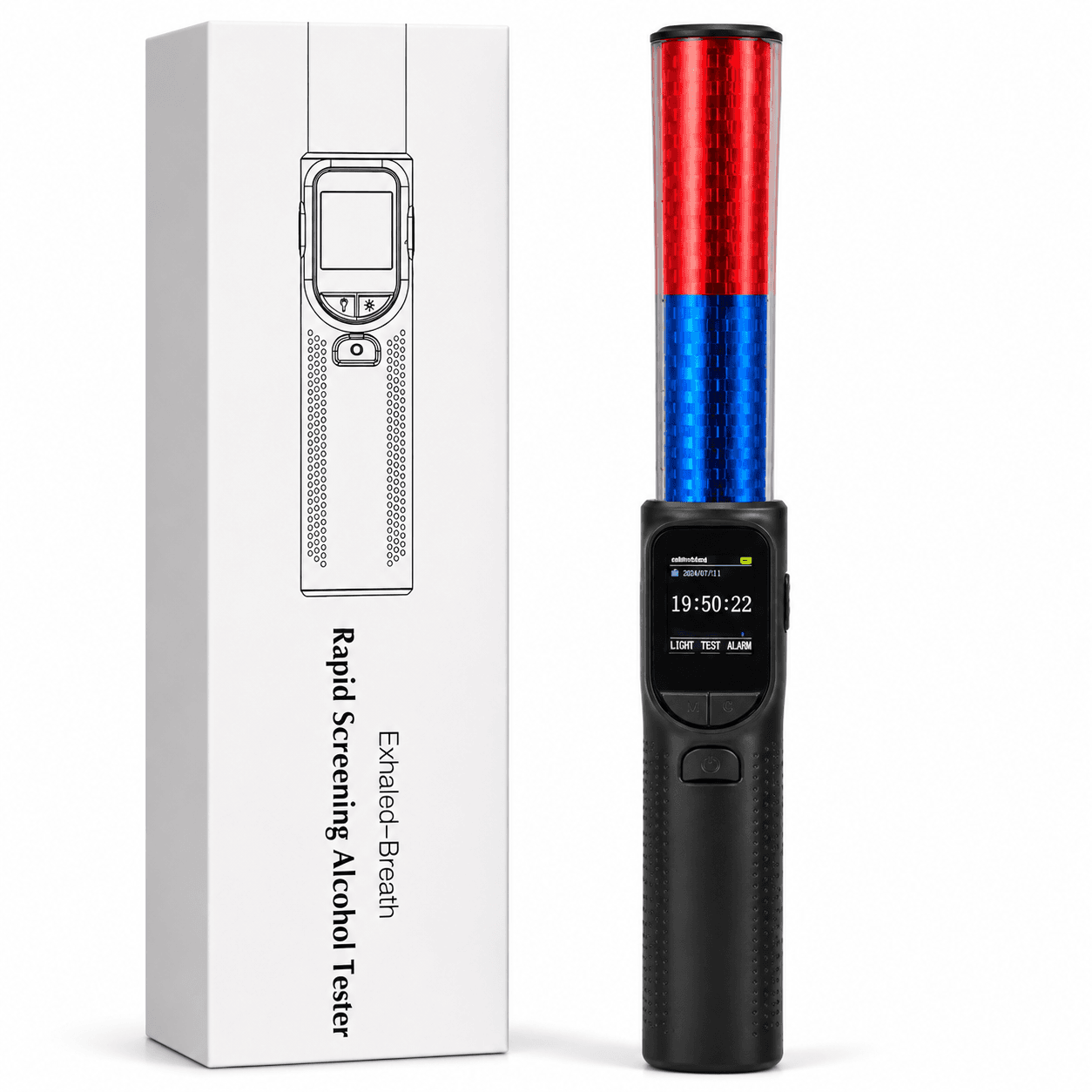
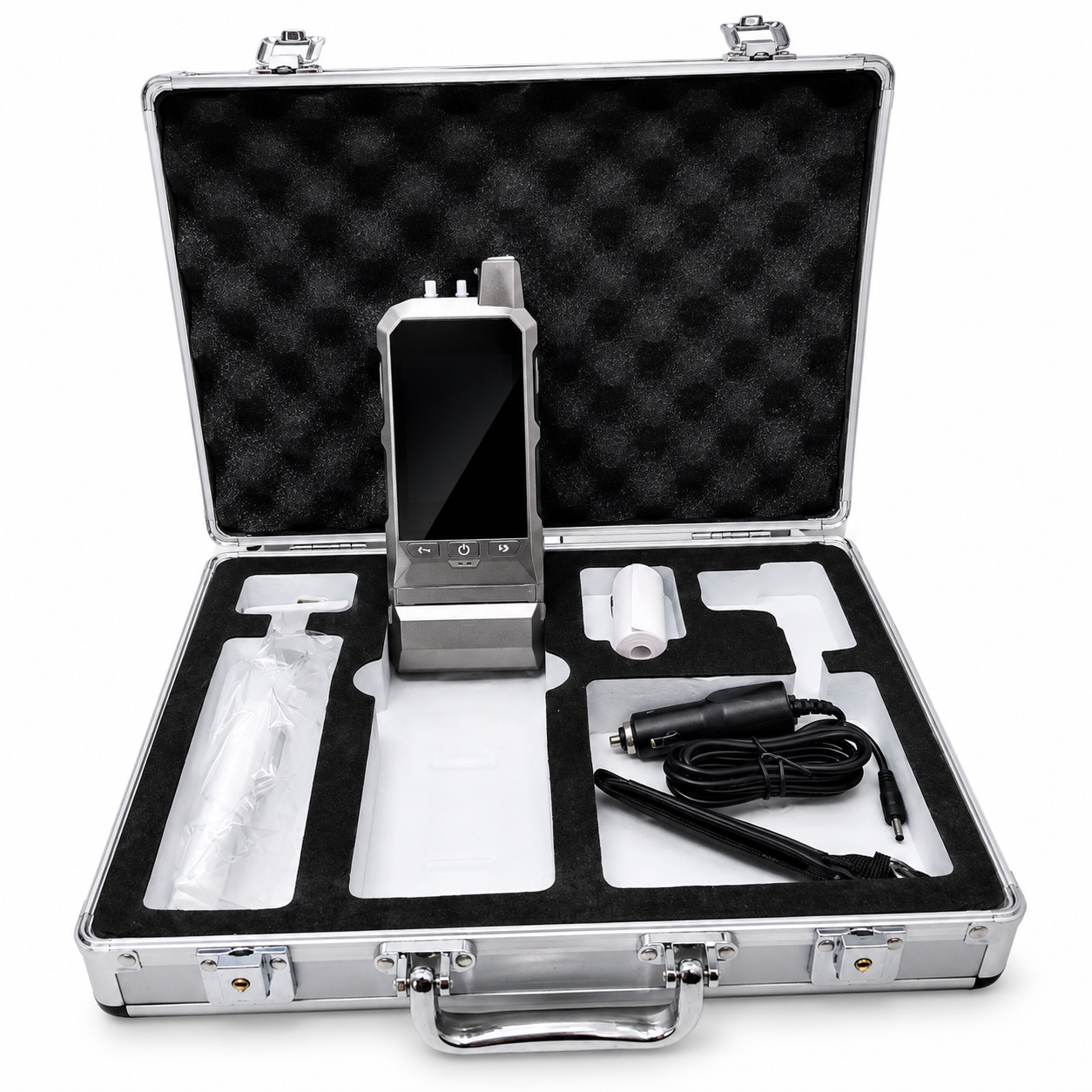
For gate and depot use, you want a fuel cell sensor breath analyser with a replaceable mouthpiece, fast recovery between tests, and printing or data-logging if you need auditable records. Semiconductor units are cheaper and suit occasional personal checks rather than continuous shift screening.
The selection questions worth asking a supplier are covered in our guide to alcohol testing machine features and uses and in the longer comprehensive guide to alcohol testing machines. If a purchase request is already on your desk, work through the verification checklist for buying an alcohol breath analyser online before you release the order.
For families who share a car, a compact personal unit does a narrower but useful job: it settles the argument at the door about who drives. Our overview of the home breath alcohol analyzer explains what to expect from that class of device.
The decision in front of you
Driving under the influence of alcohol is one of the few workplace risks where the control is cheap, quick and unambiguous. A thirty-second test at the gate costs less than one delayed consignment and far less than one uninsured claim.
The question is not whether screening is worth doing. It is whether you would rather find the problem in your own yard or hear about it in a phone call at half past eleven.
 50,000